••
Local Leaders and Lawmakers Intensify Support for Senior High School Students Amid Infrastructure and Resource Gaps
•2 min read•5 sources
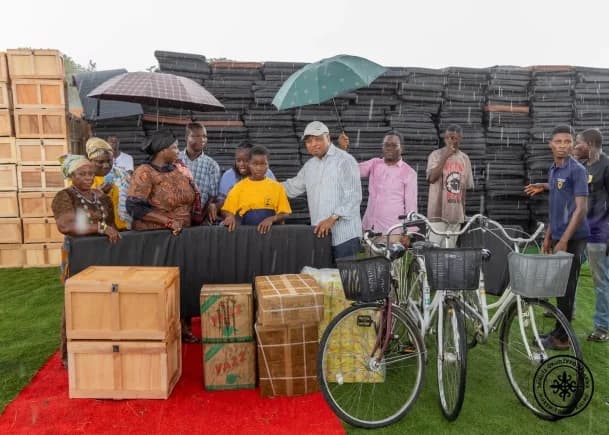
Across several regions of Ghana, Members of Parliament and local government officials have launched significant interventions to support the latest cohort of Senior High School (SHS) students and address critical infrastructure needs. In North Tongu, Member of Parliament Samuel Okudzeto Ablakwa presented 100 bicycles and essential school supplies to over 2,200 newly admitted students. This annual initiative, which includes mattresses, chop boxes, and hygiene products, is designed to ensure that financial barriers do not prevent students from accessing secondary education. Similarly, in the Komenda-Edina-Eguafo-Abrem (KEEA) Constituency, MP Samuel Atta-Mills provided over 500 freshers with student trunks, mattresses, and books. Mr. Atta-Mills further incentivized academic excellence by awarding GH₵1,000 each to two outstanding Basic Education Certificate Examination (BECE) performers, urging all beneficiaries to prioritize their studies.
While individual support for students remains high, local leaders are also focusing on the safety and environment of educational institutions. The Cape Coast Metropolitan Assembly, led by Metropolitan Chief Executive George Justice Arthur, has commenced the distribution of streetlights and dustbins to prominent schools including Mfantsipim School, Holy Child School, and St. Augustine’s College. This initiative aims to improve campus security and promote better sanitation practices among the student body. Meanwhile, in Weija-Gbawe, MP Jerry Ahmed Shaib has called on the government and the Ministry of Education to prioritize the completion of the local STEM school. The project, which was initiated during Nana Akufo-Addo’s presidency and is currently 70% complete, is seen as a vital solution to the placement pressures facing thousands of students in the constituency.
Despite these advancements in urban and peri-urban areas, rural education continues to face severe structural challenges, as evidenced by the situation at Bresuano MA Basic School in the Atebubu-Amantin Municipality. Following the destruction of the school's roof by torrential rains, students from KG1 to Primary 6 have been forced into makeshift classrooms with a total of only two teachers. While the Municipal Assembly is currently constructing a new six-unit classroom block to alleviate these conditions, the disparity highlights the ongoing struggle for educational equity in remote communities. Together, these reports reflect a broader national effort by local stakeholders to bridge the gap between educational policy and the practical needs of students and facilities.


