••
Ghana’s Financial Sector: Record Remittances and Market Growth Collide with Micro-Institutional Challenges
•3 min read•9 sources
Ghana’s financial landscape is navigating a period of significant expansion and structural transformation, characterized by record-breaking remittance inflows and a burgeoning capital market. Foreign Affairs Minister Samuel Okudzeto Ablakwa recently highlighted the vital economic role of the Ghanaian diaspora, reporting a record $7.8 billion in remittances for 2025. These funds, which surpass foreign direct investment, are crucial for household needs and national stability. To capitalize on this, the Securities and Exchange Commission (SEC) is developing frameworks to transition these annual inflows into long-term investments for infrastructure and business growth. This optimism is mirrored on the Ghana Stock Exchange (GSE), which, after being ranked the best-performing African exchange in 2024, successfully completed the GH"700 million Kasaprenko PLC Initial Public Offer (IPO). Market analysts expect a wave of new listings in sectors like energy and manufacturing before 2027, bolstered by the removal of capital gains taxes.
While the macro-economy shows signs of resilience, the micro-banking and fintech sectors are experiencing a period of intense evolution. Advans Ghana Savings and Loans reported a staggering 256% surge in net profit to GH"66.9 million in 2025, driven by a 48% rise in digital transactions and a strong focus on lending to women and rural entrepreneurs. This digital shift is being reinforced by strategic partnerships between traditional banks and fintech firms. Industry leaders from Stanbic Bank emphasize that collaborating with fintechs—who bring digital-first agility to the regulatory standing of banks—is essential for reaching the unbanked population. Highlighting this sector's activity, MobileMoney Fintech Ltd (MMFL) has scheduled an Extraordinary General Meeting for June 2026 to approve dividends and appoint new directors, signaling robust corporate health in the mobile financial services space.
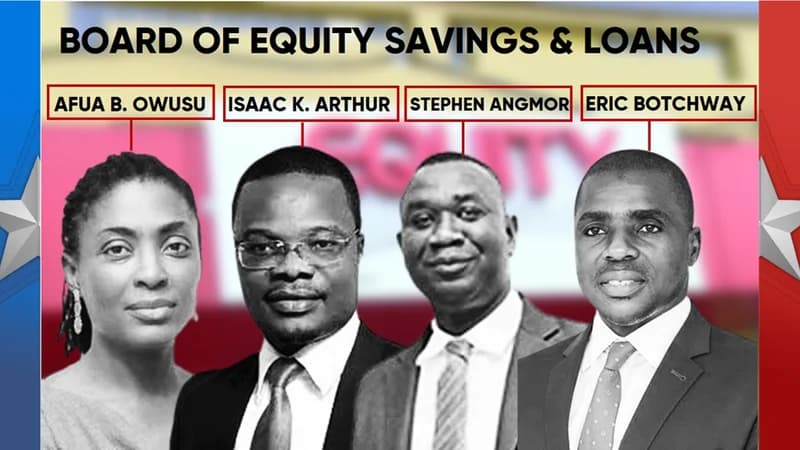
However, these successes are tempered by lingering distress in certain segments of the financial sector and structural barriers to credit. Many customers of Equity Savings and Loans continue to face severe withdrawal restrictions, with reports of shuttered offices and millions in "vanishing savings" since the implementation of the Domestic Debt Exchange Programme (DDEP). High-profile cases, such as an Accra mobile phone dealer unable to access GH"150,000, illustrate the human cost of these institutional liquidity crises. Simultaneously, Fidelity Bank Ghana has called for urgent structural solutions to unlock capital for productive but underserved sectors. Despite a 6% GDP growth rate, agriculture remains starved of formal credit, plagued by a 54.7% non-performing loan ratio. Banking executives are now advocating for risk-sharing infrastructures and alternative credit assessment models to move past the current reliance on traditional collateral.
Looking ahead, the future of Ghana’s financial sector depends on balancing rapid innovation with consumer protection. The Bank of Ghana’s proactive regulatory approach, including the use of regulatory sandboxes, is seen as a critical tool for testing new fintech solutions while maintaining stability. As the GSE prepares for more IPOs and the SEC seeks to tap into diaspora capital, the industry must also address the solvency of micro-institutions to restore full public confidence. The path to lasting prosperity will require the adoption of "patient capital" and more robust frameworks to protect depositors from the volatility of the domestic debt market, ensuring that the gains from remittances and digital banking reach the most vulnerable sectors of the economy.
This story touches markets covered on Anansi Intelligence ↗.
More from business
Continue exploring similar stories


