Ghana News AI
HomeBriefsAsk GhanaAnalysisTopicsAbout
•
•

Stay Informed

Get AI-curated news briefs from Ghana delivered to your inbox every morning. Free forever, no spam.

Explore

  • Home
  • Briefs
  • About

Categories

  • Politics
  • Business
  • Sports
  • Entertainment
  • Africa

Features

  • Analysis
  • Cedi Rates
  • Dollar to Cedi
  • Ghana Gold Price

Topics

  • All Topics
  • Armed Forces Recruitment
  • Immigration Service Recruitment
  • Fire Service Recruitment
  • Prisons Service Recruitment
  • Customs Recruitment
  • WAEC Results & News
  • Ghana Education Service

Legal

  • Privacy Policy
  • Terms of Service
Ghana News AI© 2026 Ghana News AI. All rights reserved.
Made withfor Ghana
education

Bawku Teacher Yussif Abdul Fatawu Honored for Resilience as Elmina's Atsiapa Memorial School Receives Infrastructure Support

Yesterday•3 min read•2 sources
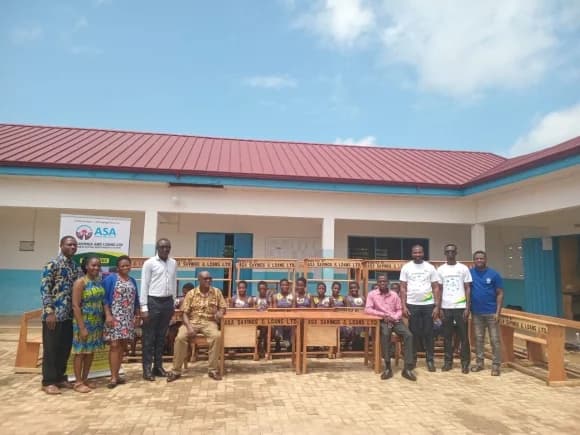
Atsiapa Memorial Methodist Basic School receives furniture donation from ASA Savings and Loans
  1. Home
  2. /Education
  3. /Bawku Teacher Yussif Abdul Fatawu Honored for Resilience as Elmina's Atsiapa Memorial School Receives Infrastructure Support

The Ghanaian education sector has witnessed significant developments this week, highlighting both the extraordinary dedication of individual educators and the vital role of corporate social responsibility in addressing infrastructure gaps. In the conflict-prone municipality of Bawku, Deputy Minister of Education Dr. Clement Abas Apaak formally recognized Yussif Abdul Fatawu, a teacher who has remained committed to his students for nearly two decades despite persistent regional insecurity. Simultaneously, in Elmina, the Atsiapa Memorial Methodist Basic School received a crucial donation of classroom furniture from ASA Savings and Loans Limited to alleviate severe congestion and improve learning conditions for its student population.

In Bawku, Mr. Fatawu's 19-year tenure serves as a testament to professional resilience. Amidst a backdrop of periodic conflict that has often disrupted public services, the Deputy Minister presented Mr. Fatawu with a cash donation of GH"10,000 as a token of the state's appreciation for his unwavering service. Dr. Apaak emphasized that such dedication from public servants is critical for maintaining stability and hope during difficult times. Expressing his gratitude, Mr. Fatawu pledged to continue his role as a mentor and model for his peers, stressing that his primary goal remains the pursuit of a brighter future for the children of Bawku, regardless of the challenges posed by local instability.

Further south in the Central Region, the Atsiapa Memorial Methodist Basic School faces a different set of challenges, primarily centered on a lack of physical resources. With an enrollment of approximately 600 pupils, Headteacher Peter Woode revealed that the school previously operated with only 180 dual desks, leading to extreme classroom congestion that hindered student concentration. Addressing this deficit, ASA Savings and Loans LTD donated 20 dual desks, alongside tables and chairs for staff. Richard Nartey, the company’s Sustainability Manager, noted that the donation is part of a broader corporate commitment to social responsibility. However, despite this aid, the school continues to struggle with limited ICT resources, possessing only five functional computers to serve its entire student body.

These stories underscore a dual reality in Ghana’s educational landscape: while the dedication of teachers like Mr. Fatawu provides the human foundation for learning, the lack of physical resources at schools like Atsiapa Memorial remains a significant barrier to modern education. The interventions by both the Ministry of Education and private entities like ASA Savings and Loans are vital, yet they also highlight the ongoing need for systemic investment in both personnel and infrastructure. Moving forward, education stakeholders are calling for continued support to ensure that every Ghanaian child, whether in a conflict zone or a resource-constrained urban center, has access to a safe and well-equipped learning environment.

Our Take

From the Team

Coming Soon

Our team will add key insights, trends, and actionable takeaways to help you stay informed faster.

This story touches markets covered on Anansi Intelligence ↗.

More from education

Continue exploring similar stories

President Akufo-Addo Highlights Education as Essential Pillar for Africa’s Growth at West Africa Youth Summit
education|Yesterday

President Akufo-Addo Highlights Education as Essential Pillar for Africa’s Growth at West Africa Youth Summit

President Nana Addo Dankwa Akufo-Addo has called on young people across the continent to view education as the indispensable foundation for Africa's socio-economic development. Speaking at the 3rd West Africa Youth Summit held in Accra, the President emphasized that the future of the continent depends on the intellectual and technical empowerment of its youth. He underscored that education is not merely a tool for personal advancement but a critical driver for social transformation, urging the youth to take ownership of this mission and act as ambassadors for quality learning within their respective communities. During his address, the President highlighted the transformative impact of the Free Senior High School (SHS) policy in Ghana, which was designed to remove financial barriers to secondary education. He noted that the initiative has led to a significant surge in school enrollment figures, specifically benefiting girls and children from disadvantaged backgrounds who were previously excluded from the academic system. By providing equitable access, the policy seeks to harness the potential of all citizens, ensuring that no child is left behind due to their economic status. This success, he argued, serves as a blueprint for how targeted educational policies can bridge social divides. Akufo-Addo further warned of the severe repercussions of failing to invest in the education of the younger generation, stating that excluding youth from educational opportunities poses a risk to regional stability and progress. He argued that a well-educated workforce is necessary to develop homegrown, innovative solutions to the unique challenges facing the African continent. By fostering a culture of academic excellence and critical thinking, the President believes Africa can transition from being a consumer of global technology to a creator of local solutions that address poverty and economic volatility. In conclusion, the President’s message at the summit served as both an inspiration and a directive to the West African youth. He reiterated that for Africa to achieve true independence and global competitiveness, it must prioritize human capital development above all else. The call to action encourages young leaders to advocate for educational reforms and to utilize their acquired knowledge to drive the continent toward a prosperous and self-sufficient future, emphasizing that the youth are the primary catalysts for this long-term developmental shift.

Ghanaian Academic Excellence and Lessons Learned: Arhin William Triumphs in China While Asantewaa Reflects on SHS Distractions
education|Yesterday

Ghanaian Academic Excellence and Lessons Learned: Arhin William Triumphs in China While Asantewaa Reflects on SHS Distractions

The landscape of Ghanaian education continues to produce diverse narratives, ranging from international academic triumphs to introspective reflections on personal growth and discipline. Recently, the spotlight has fallen on two distinct figures whose stories highlight the multifaceted nature of the student experience: Arhin William, whose mastery of the Chinese language has earned him global acclaim, and popular influencer Asantewaa, who has opened up about the academic challenges she faced during her formative secondary school years. Arhin William, a master’s graduate from Shenyang Normal University in China, recently captivated an international audience with a "flawless" graduation speech delivered entirely in Chinese. Majoring in Chinese International Education, William’s journey was supported by the prestigious Chinese Government Scholarship, reflecting his high level of academic merit. His exceptional performance and leadership qualities led to his selection as the International Students’ Representative for his cohort at the graduation ceremony. His success serves as a powerful testament to the potential of Ghanaian students to excel in foreign linguistic and academic environments, bridging cultural gaps through dedication and linguistic proficiency. In contrast to this story of international success, Ghanaian influencer Asantewaa has shared a more cautionary tale regarding her time at Winneba Senior High School (SHS). In a candid interview, she reflected on how her academic performance, which was initially exceptional, suffered significantly due to the distractions of a teenage relationship. Asantewaa admitted that these habits during her SHS days cost her dearly, providing an honest look at the social pressures young students face. Her story underscores the delicate balance between social life and academic responsibilities, reminding current students of the potential long-term consequences of losing focus during their secondary education. Together, these narratives offer a comprehensive view of the Ghanaian educational experience and the various paths it can take. While Arhin William’s achievement underscores the global opportunities available to those who maintain rigorous discipline, Asantewaa’s reflections serve as an important reminder of the internal and external factors that can derail even the most promising academic careers. Both accounts contribute to a broader national dialogue on the necessity of focus, the value of international scholarships, and the enduring impact of choices made during one's student years.

Dr Clement Abas Apaak (arrowed), Deputy Minister of Education, with some of the dignitaries at the launch of the School Awards
education|Yesterday

St. Thomas Aquinas SHS Secures Multiple Victories as Ghana Launches New Literacy and School Accountability Initiatives

Ghana’s educational landscape experienced a surge of competitive and reformative activity in late June 2026, headlined by the dual success of St. Thomas Aquinas Senior High School. The institution emerged as a primary victor in two distinct arenas: the National Cadet Drill and Band Competition and the BTS Ghana Research Project visual arts contest. At the National Cadet Corps event held at the Ghana National Fire Service Training School, St. Thomas Aquinas and Bishop Herman College were crowned champions after demonstrating exceptional discipline and resilience despite heavy rainfall. Simultaneously, St. Thomas Aquinas clinched first place in the visual arts competition at the Ghana Library Authority, outperforming St. Mary’s and Accra High School in an event designed to highlight the challenges faced by female artists in the creative industry. Beyond individual school achievements, the national agenda has shifted toward integrating technology and critical thinking into the curriculum through the launch of the 2026 Literacy Challenge. Targeting students aged 11 to 15, this year’s competition focuses on the impact of Artificial Intelligence (AI) in education. Participants are tasked with writing a 600-word letter to the Minister for Education, analyzing the pros and cons of AI and proposing strategies for its effective integration in both urban and rural schools. Supported by stakeholders such as Citi FM, Channel One TV, and the British Council, the initiative seeks to foster creativity and analytical skills among the youth as they navigate a digital-first future. In tandem with student-centered competitions, the government and the National Schools Inspectorate Authority (NaSIA) have introduced the National Schools Awards (GALOP Edition) to drive institutional excellence. Launched in Accra with support from the World Bank, this initiative represents a shift in educational policy from prioritizing mere enrollment to focusing on tangible learning outcomes and management accountability. Deputy Minister of Education, Dr. Clement Abas Apaak, emphasized that the awards would evaluate schools based on measurable improvements in teaching quality and administrative efficiency, ensuring that the Ghana Accountability for Learning Outcomes Project (GALOP) achieves its core objectives. These collective developments—ranging from military-style discipline and artistic expression to AI literacy and institutional oversight—signal a comprehensive approach to upgrading Ghana’s educational standards. While competitions provide a platform for students to showcase individual and collective talents, the new award schemes and literacy tasks aim to build a more robust, accountable, and technologically-aware school system. As research findings from the visual arts contest are disseminated and the literacy challenge progresses, stakeholders expect these initiatives to foster a more competitive and high-achieving environment for both students and educators across the country.

Mfantsipim @150 committee calls on Osabarima Kwesi Atta II ahead of historic anniversary celebrations
education|Yesterday

Mfantsipim School Prepares for Historic 150th Anniversary as Alumni Celebrate the 'Kwabotwe' Legacy

Mfantsipim School, Ghana’s premier secondary institution, has officially commenced preparations for its landmark 150th-anniversary celebrations, marking a sesquicentennial of educational excellence since its founding on April 3, 1876. In a significant step toward the historic 2026 milestone, the Mfantsipim 150th Anniversary Planning Committee recently paid a courtesy call on Osabarimba Kwesi Atta II, the Paramount Chief of the Oguaa Traditional Area. Led by Kenneth Shelton Aikins, the delegation briefed the traditional leadership on the roadmap for the celebrations, which are set to culminate in a grand durbar on November 14, 2026, solidifying the school's position as a cornerstone of Ghanaian academic heritage. The upcoming anniversary, themed around the concept of gratitude and communal heritage, will feature a unique “Aseda Durbar.” This special thanksgiving event is designed to bring together other historic secondary schools in Cape Coast, fostering a spirit of unity among the institutions that have shaped the nation’s leadership. During the visit, Osabarimba Kwesi Atta II expressed his unwavering commitment to supporting the celebrations, while the Headmaster of the school, Ebenezer Aidoo, extended appreciation for the traditional council's continuous guidance. This collaboration underscores the deep-rooted connection between the school, colloquially known as "Kwabotwe," and the Oguaa community. As the school looks toward its future, the enduring values of "Mfantsipism" continue to resonate through its alumni, such as the 2016 year group (MOBA ’16). Reflecting on their journey a decade after first entering the school’s gates, these alumni highlight the transformative power of the institution’s motto, "Dwen Hwɛ Kan" (Think and Look Ahead). The rigorous daily routines—ranging from the steep climbs of the Cape Coast hills to disciplined morning assemblies—have traditionally instilled character traits of honesty, grit, and humility. This "brotherhood beyond the hills" represents the living legacy of the school, as each generation carries forward a profound sense of identity and commitment to national contribution. The convergence of these historic preparations and the deep-seated loyalty of its Old Boys (MOBAs) sets the stage for a celebration that transcends mere ceremony. As Mfantsipim approaches 2026, the anniversary serves as both a reflection on a century and a half of educational leadership and a call to action for future generations. The planned events will not only celebrate the past but also reinforce the school's mission to produce resilient individuals prepared for the complexities of modern life, ensuring that the light of "Kwabotwe" continues to shine across the African continent and beyond.

All
africa
business
education
entertainment
health
news
politics
sports
technology