••
US and Israel Launch Major Military Operations Against Iran Following Reported Death of Supreme Leader
•3 min read•9 sources
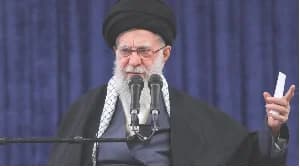
The United States and Israel have initiated significant military strikes across Iran, signaling a major escalation in Middle Eastern tensions. Dubbed "Operation Epic Fury" by the Pentagon and "Operation Lion's Roar" by Israeli forces, the joint offensive consists primarily of high-intensity air raids targeting strategic Iranian leadership and military infrastructure. Central to the operation is the reported death of Iran's Supreme Leader, Ayatollah Ali Khamenei, which U.S. President Donald Trump announced as a moment of "justice" for the global community. Following the strikes, the Iranian government has officially declared 40 days of national mourning, confirming a significant shift in the country's political landscape.
The military campaign has resulted in heavy casualties and widespread destruction. Reports indicate that over 200 people have been killed in Iran, including seven high-ranking officials. However, the strikes have also drawn international scrutiny due to civilian impacts, most notably a tragic airstrike on a girls' school that resulted in dozens of fatalities. In retaliation, Iran's Islamic Revolutionary Guard Corps (IRGC) has launched a series of missile attacks targeting U.S. assets and military installations across the Middle East, as well as several neighboring Gulf nations. While the U.S. currently maintains a significant military presence in the region, officials have emphasized that no ground troops have been deployed into Iranian territory thus far.
In Washington, the strikes have reignited a fierce debate over executive authority and war powers. While Republican lawmakers have largely unified in support of the operations, citing the need to dismantle Iran's nuclear ambitions and its "campaign of bloodshed," Democrats have raised concerns regarding the legality of the actions. Critics in Congress argue that the administration bypassed necessary legislative approval, noting that there has been no formal declaration of war. President Trump, meanwhile, has continued to urge the Iranian populace to seize this moment to overthrow their clerical rulers, framing the military action as a preemptive necessity following the collapse of diplomatic negotiations regarding Tehran’s long-range missile programs.
The international community has reacted with a mixture of alarm and calls for restraint. United Nations Secretary-General Antonio Guterres condemned the escalation, warning that the conflict poses a dire threat to international peace and security. Global powers, including Russia, Saudi Arabia, and various European nations, have urged both sides to seek a path toward de-escalation to prevent a wider regional war. As the situation remains volatile, local authorities in several U.S. cities have been placed on high alert for potential security threats. With the Pentagon indicating that military objectives include the total elimination of Iranian military capabilities, the coming days are expected to see continued bombardment and heightened instability across the region.
This story touches markets covered on Anansi Intelligence ↗.
More from politics
Continue exploring similar stories


