••
US Signals Major Shift in Global Security with Imminent Iran Peace Deal and Targeted Strike on Venezuelan Gang Leader
•3 min read•13 sources
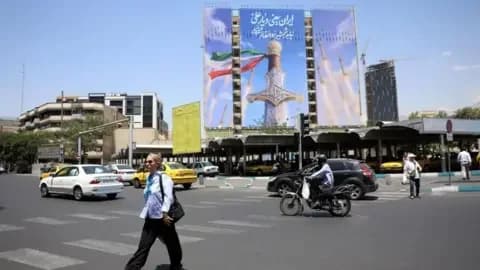
The United States is entering a pivotal phase in its foreign policy and regional security efforts, marked by a potential historic diplomatic breakthrough with Iran and a successful high-stakes military operation in Venezuela. Officials report that Washington and Tehran are nearing the finalization of the "Islamabad Agreement," a diplomatic accord mediated by Pakistan and Qatar aimed at ending military hostilities and reopening the Strait of Hormuz. Simultaneously, the U.S. military has conducted a targeted airstrike in Venezuela's Bolívar state, successfully killing Héctor Rusthenford Guerrero Flores, known as "Niño Guerrero," the notorious leader of the Tren de Aragua transnational gang. These dual developments signal a significant recalibration of U.S. engagement in both the Middle East and South America.
The proposed "Islamabad Agreement" represents a critical effort to restore commercial shipping in the Strait of Hormuz, a vital maritime corridor for global energy trade that has faced severe disruptions. The two-page memorandum of understanding outlines a framework for a ceasefire, the lifting of certain wartime restrictions, and a two-stage negotiation process to address complex issues including Iran's nuclear program and future sanctions. While mediators express optimism that the deal could be signed within days, regional allies—most notably Israel—remain deeply skeptical. The success of the accord hinges on a 60-day technical negotiation period and Iran's compliance with nuclear commitments, all while internal divisions within the Iranian leadership continue to pose challenges to a lasting peace.
In a surprising shift in Western Hemisphere relations, the airstrike against Guerrero Flores was described as a collaborative effort between U.S. forces and Venezuelan authorities. Once a local prison gang, Tren de Aragua evolved under Guerrero's leadership into a transnational criminal organization involved in drug trafficking and terrorism. President Trump has framed the operation as a major victory against narcotics terrorism and a commitment to combating transnational criminal threats. However, security analysts caution that the gang's decentralized structure and strong regional alliances may allow it to adapt despite the loss of its top leader. The operation marks a notable pivot from previous hostilities between Washington and Caracas, suggesting a new chapter of tactical cooperation against shared security threats.
Despite these diplomatic and military strides, regional stability remains fragile as secondary conflicts persist. Recent Israeli airstrikes in southern Lebanon, which resulted in fatalities in the town of Marrakeh, underscore the ongoing tensions between Israel and Hezbollah that could complicate the U.S.-Iran negotiations. Furthermore, the administrative landscape in Washington continues to face legal scrutiny; a federal judge recently ordered the removal of President Trump’s name from the Kennedy Center, citing a lack of Congressional approval. Together, these events illustrate a complex global landscape where the U.S. is aggressively pursuing high-level diplomacy to secure trade routes while simultaneously utilizing precision military force to dismantle criminal networks.
This story touches markets covered on Anansi Intelligence ↗.
More from politics
Continue exploring similar stories


