••
UniMAC Leaders Call for Wisdom-Led Journalism and Indigenous Communication to Combat AI-Driven Misinformation
•3 min read•6 sources
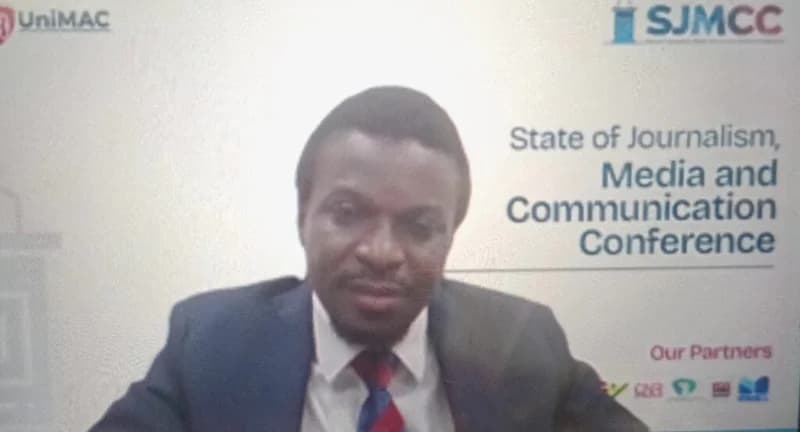
The University of Media, Arts and Communication (UniMAC) has convened its inaugural State of Journalism, Media, and Communication Conference (SJMCC 2026), marking a significant milestone as the first international academic event since the merger of several key journalism and communication institutions. Under the theme 'Navigating the Future of Journalism, Media, and Communication in a Dynamic World,' academic leaders and industry experts gathered to address the profound transformations reshaped by digital innovation. The conference served as a critical platform for discussing how the media landscape must evolve to maintain relevance and credibility in an era dominated by rapid technological shifts.
Central to the discussions was the urgent need to rethink journalism education in the face of artificial intelligence (AI) and the rising tide of misinformation. Prof. Christiana Hammond, Rector of UniMAC-IJ, argued that the future of the profession demands more than just technical proficiency; it requires 'wisdom,' characterized by ethical leadership, critical thinking, and adaptability. She emphasized that journalism schools must proactively lead debates on contemporary issues rather than reacting to them. This sentiment was echoed by Professor Winston Kwame Abroampa, Pro Vice-Chancellor of UniMAC, who urged African scholars to take a leading role in global media conversations, ensuring that solutions to digital challenges reflect African realities and national development goals.
Addressing the systemic threats to the industry, Professor Godwin Etse Sikanku, Dean of the School of Journalism and Media Studies, warned that misinformation and disinformation are actively eroding public trust in the media and undermining democratic governance. He noted that while AI and digital platforms offer new tools for news production and audience engagement, they also pose unprecedented challenges to media integrity. Prof. Sikanku called for innovative, evidence-based responses and a commitment to high ethical standards to restore public confidence. The conference aims to foster deeper collaboration between scholars and practitioners to influence media policy and develop robust strategies for the digital age.
In tandem with the academic discourse, the Global Media Alliance (GMA) and UniMAC launched the first Public Relations Art Exhibition as part of the World PR Day Festival 2026. Centered on the theme 'Decolonising PR: Reclaiming Indigenous Communication Power,' the exhibition showcased African communication systems and their historical significance. Lead researcher Fuseini Iddrisu and Dr. Noel Nutsugah highlighted the intellectual contributions of Africa to the field of public relations, advocating for authentic storytelling rooted in local contexts. This initiative, which continues with upcoming events like 'The PR Dialogue,' seeks to inspire a new generation of practitioners to embrace indigenous communication strategies alongside modern practices.
This story touches markets covered on Anansi Intelligence ↗.
More from education
Continue exploring similar stories


