••
UniMAC Vice Chancellor Navigates Complex Institutional Merger While Urging AI Investment for Ghana's Media Future
•2 min read•8 sources
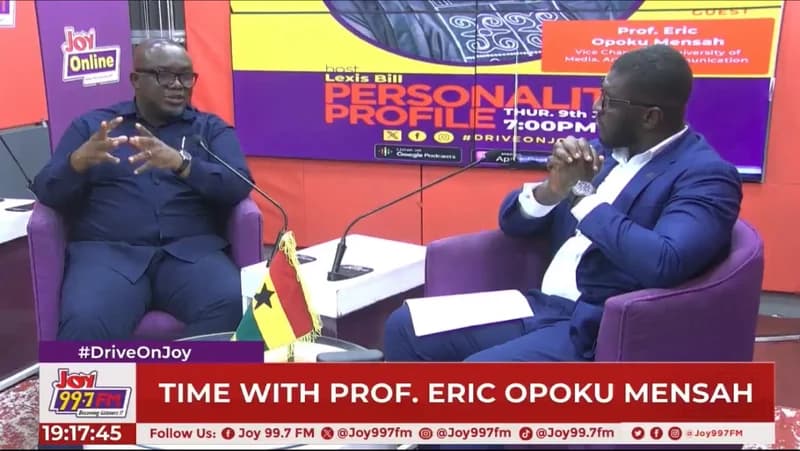
Professor Eric Opoku Mensah, the Vice Chancellor of the University of Media, Arts and Communication (UniMAC), has outlined a vision for the institution that balances the structural complexities of its recent merger with the urgent need to adopt artificial intelligence (AI) in media education. Since the legal unification of the Ghana Institute of Journalism (GIJ), the National Film and Television Institute (NAFTI), and the Ghana Institute of Languages (GIL) in 2020, the university has been navigating a transition that the Vice Chancellor admits "keeps me awake at night." This period of internal restructuring coincides with a global shift in the media landscape, prompting Prof. Mensah to call for immediate state intervention to ensure Ghana’s media professionals remain globally competitive.
The merger, established by an Act of Parliament, seeks to create a powerhouse for media and communication education in West Africa, yet the practical integration of three distinct entities remains a formidable task. Prof. Mensah highlighted that the process involves reconciling different institutional cultures, disparate administrative systems, and the logistical challenges of operating across multiple geographical locations. Creating a unified UniMAC identity while respecting the legacies of GIJ, NAFTI, and GIL requires constant effort and diplomatic management. Furthermore, the university faces significant infrastructure deficits, with student accommodation being a particularly pressing concern that currently hampers the student experience.
Parallel to these internal hurdles is the rapidly evolving technological environment. Prof. Mensah has issued a stern warning that Ghana risks losing its competitive edge in the media industry if it fails to invest in AI-focused communication education. He emphasized that AI is fundamentally transforming journalism, broadcasting, and film production, necessitating a radical reevaluation of training strategies at the university level. To address this, the Vice Chancellor is seeking increased government support to establish advanced AI laboratories and specialized digital infrastructure. These facilities are seen as essential for producing graduates who can navigate a tech-driven world and maintain Ghana's influence in the global media landscape.
Despite the sleepless nights caused by administrative and infrastructural challenges, the leadership at UniMAC remains focused on long-term excellence. The goal is to evolve the university into a premier regional center for media and communication training. By bridging the gap between historical legacy and future technology, UniMAC aims to provide a robust platform for teaching and learning that prepares the next generation of Ghanaian media professionals for the complexities of the 21st-century global marketplace.
This story touches markets covered on Anansi Intelligence ↗.
More from education
Continue exploring similar stories


