••
University of Education, Winneba Claims Football Glory as UCC Emerges Overall Champion at 9th Mini GUSA Games
•2 min read•6 sources
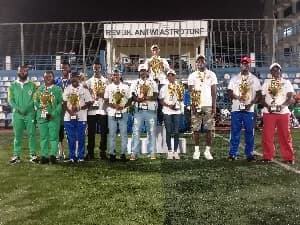
The 9th Peeva Mini GUSA Games concluded at the University of Professional Studies, Accra (UPSA), with the University of Cape Coast (UCC) emerging as the overall champions despite a dramatic defeat in the marquee football final. Held from May 5 to May 15, 2026, the event brought together 16 tertiary institutions to compete across multiple disciplines. The games were organized under the theme of integrating athletics with academic professionalism, aiming to foster unity, discipline, and competitive spirit among student-athletes across Ghana.
In the highly anticipated football final at the UPSA Park, the University of Education, Winneba (UEW), secured a narrow 1-0 victory over their rivals, UCC. The match's deciding moment came just before halftime when UEW converted a penalty following a contentious ruling. Although UCC dominated possession and created several scoring opportunities throughout the second half, they were thwarted by a disciplined UEW defense and a series of crucial saves by the UEW goalkeeper. This victory marks a significant achievement for UEW, reinforcing their reputation as a powerhouse in university football.
While UCC fell short on the football pitch, their dominance across other sporting disciplines ensured they topped the overall medal standings. UCC finished the tournament with an impressive haul of 50 medals, including 21 gold, 18 silver, and 11 bronze. The Kwame Nkrumah University of Science and Technology (KNUST) secured second place in the overall rankings, while football victors UEW claimed third place. This broad success across various events highlights the depth of UCC's athletic programs and their consistent performance throughout the ten-day competition.
Despite the successful execution of the games, officials highlighted ongoing challenges within the university sports sector. Shaibu Ibrahim Tanko, President of the Ghana University Sports Association (GUSA), used the event's platform to call for increased investment in sports infrastructure and improved funding. He emphasized that such support is vital for maintaining the momentum of tertiary sports and ensuring that these competitions continue to bridge the gap between academic life and professional athletic development for Ghanaian students.
This story touches markets covered on Anansi Intelligence ↗.
Live rates
Ghana gold price →More from sports
Continue exploring similar stories


