••
Mixed Fortunes at African Athletics Championships: Ghana Secures Medals as Organizers Overcome Initial Hurdles
•3 min read•18 sources
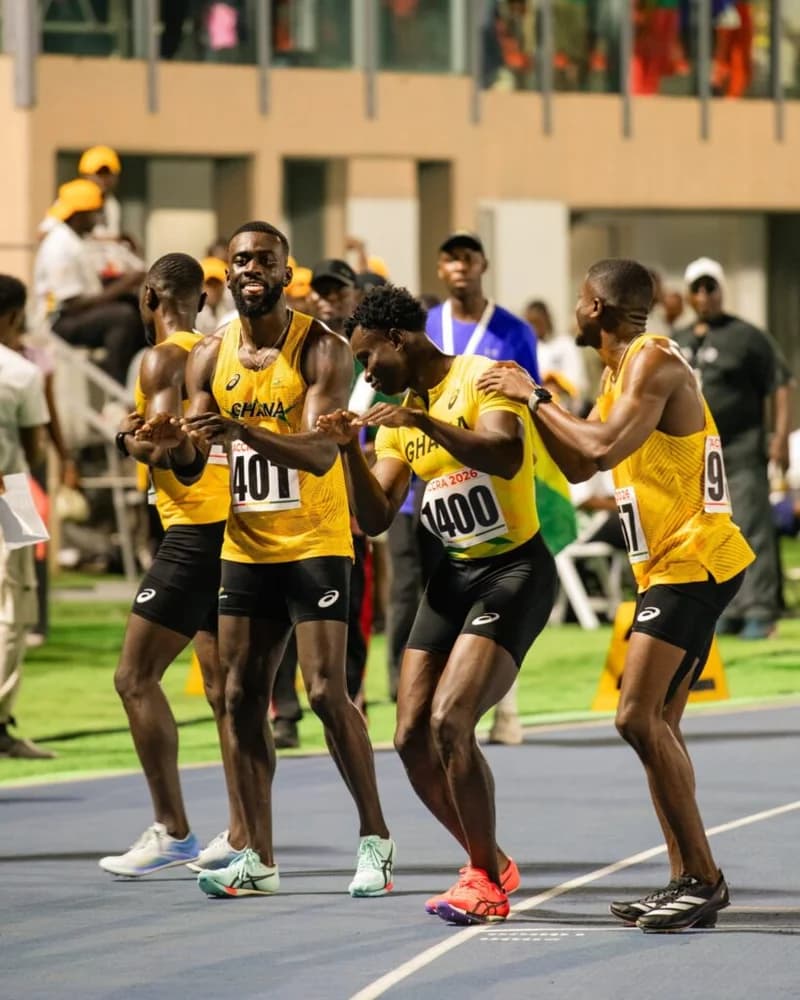
The 2026 African Senior Athletics Championships in Accra has seen a dramatic shift in momentum, as Ghanaian athletes delivered a series of podium finishes amidst a backdrop of improving organizational standards. Competing at the University of Ghana Stadium, Team Ghana has secured a total of five medals as of the third day of competition. The highlight for the home crowd was the performance of the men’s 4x100m relay team—comprising Edwin Gadayi, Joseph-Paul Amoah, Ibrahim Fuseini, and Abdul-Rasheed Saminu—who clinched a bronze medal with a time of 38.74 seconds. Despite falling just short of Ivory Coast (gold) and Nigeria (silver), the team’s qualification for the final was marked by a viral ‘Kakalika’ dance celebration that energized the local spectators.
In addition to the men’s relay success, Ghana’s emerging talent has been on full display in several individual and team events. Esther Obenewaa secured a silver medal in the women’s high jump, marking the highest individual achievement for the host nation so far. On the track, Alex Amankwah fought through a competitive field to win bronze in the men’s 800m final with a time of 1:46.18, finishing behind Kenya’s Kelvin Kimtai and Morocco’s Imad Bouchejra. Florence Agyemang also added to the tally with a bronze in the women’s 400m, while the young women’s 4x100m relay team, featuring Aisha Jaffar and Gladys Boateng, secured another bronze with a time of 44.85 seconds.
However, the successes on the field have been occasionally overshadowed by logistical challenges that drew sharp criticism from visiting delegations during the opening days. Patrick Moesi, the technical director for Botswana, expressed frustration over frequent false starts and the initial absence of immediate electronic results, which he claimed hindered athlete planning. South African athletes also initially raised concerns regarding food and accommodation at the Games Village. In response to these pressures, the Local Organising Committee (LOC) has implemented significant upgrades, including restored WiFi for media personnel, the installation of timing screens for instant results, and improved catering services. South African athlete Marlie Viljoen recently noted that conditions had significantly improved, describing the recent food options as "amazing."
Organizers also moved to clarify specific controversies that arose during the heat of competition. Following a pole vault incident where an athlete’s equipment snapped, Veronica Commey, Deputy Director General of the National Sports Authority (NSA), clarified that the LOC did not provide the vaults. She explained that athletes are responsible for their own specialized equipment, dismissing claims that faulty gear was supplied by the organizers. As the championships transition from early turbulence to a more controlled environment, the focus remains on the final days of competition. The event is seen as a crucial test for Ghana’s sports infrastructure and a platform for the nation’s young athletes to assert themselves on the continental stage.
This story touches markets covered on Anansi Intelligence ↗.
Live rates
Ghana gold price →More from sports
Continue exploring similar stories


