••
TTU Workshop Ignites National Dialogue on Small Modular Reactors for Ghana's Energy Future
•2 min read•1 source
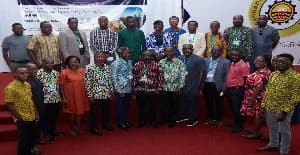
Takoradi Technical University (TTU) recently hosted a landmark workshop titled "Integrating Small Modular Reactors for a Sustainable Energy Future in Ghana," drawing over 170 stakeholders to discuss the next frontier of the nation's energy strategy. The event served as a critical platform for exploring the deployment of advanced nuclear technology, specifically Small Modular Reactors (SMRs), as a cornerstone of Ghana’s long-term industrial and economic ambitions. By bringing together academia, industry experts, and policymakers, the workshop aimed to shift the national discourse toward a more diversified and resilient energy mix that can meet the growing demands of a developing economy.
During the sessions, Professor Ebenezer Boakye underscored the urgency of establishing a reliable energy framework, noting that a mix of traditional and innovative power sources is essential for national stability. This sentiment was echoed by Mark Amoah Nyasapoh, who presented a Ghana-specific case study illustrating how SMRs can complement existing renewable energy sources. Nyasapoh argued that the modular nature of these reactors allows for incremental capacity increases, which could effectively stabilize electricity prices and provide the consistent high-voltage power required for heavy industry and sustained economic expansion.
Addressing the often-sensitive topic of nuclear safety, keynote speaker Professor Hossam A. Gabber provided a comprehensive analysis of modern safety protocols inherent in SMR designs. He emphasized that these reactors are engineered with advanced passive safety features that significantly mitigate risks compared to traditional large-scale nuclear plants. Gabber’s presentation was pivotal in reinforcing the reliability of nuclear technology as a safe, low-carbon alternative capable of anchoring Ghana's green energy transition without compromising public safety or environmental integrity.
The workshop concluded with a forward-looking dialogue on human resource development and technical readiness. A significant outcome of the event was the proposal for a strategic partnership to establish an SMR simulator at TTU. Such a facility would be instrumental in building local expertise and providing hands-on training for the next generation of Ghanaian nuclear engineers and technicians. As Ghana continues to evaluate its energy options, the consensus from the TTU workshop suggests that SMRs represent a viable path toward achieving both energy security and sustainable industrial growth.
This story touches markets covered on Anansi Intelligence ↗.
More from technology
Continue exploring similar stories


