••
Telecel Ghana Bolsters Digital Education with New IT Laboratories and Female Engineering Scholarships
•2 min read•4 sources
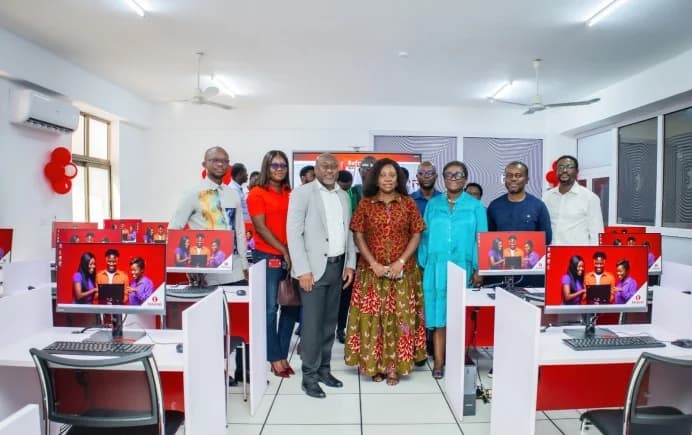
Telecel Ghana has significantly expanded its commitment to national digital literacy through a series of strategic educational investments, ranging from tertiary infrastructure to grassroots community support. At the forefront of these initiatives is the inauguration of a state-of-the-art 42-unit computer laboratory at the University of Ghana. Designed to enhance research and innovation, the facility is equipped with high-speed internet and an 86-inch interactive touchscreen. This project marks a continuation of a long-standing partnership between the telecommunications giant and the university that dates back to 2010, aiming to foster digital inclusion and provide students with the tools necessary for a modern academic environment.
In addition to physical infrastructure, the company is advancing gender parity in technical fields through its Female Engineering Students Scholarship Programme (FESSP). Telecel recently unveiled ten final-year female students as the 2026 cohort, providing them with a comprehensive support package that includes financial aid, laptops, data bundles, and mentorship. According to CEO Ing. Patricia Obo-Nai and HR Director Rachael Appenteng, the initiative is vital for nurturing local talent within the tech ecosystem. Since its inception in 2011, FESSP has empowered over 100 women, offering internships and potential job placements to ensure a steady pipeline of female leaders in STEM.
Further extending its reach to the Eastern Region, the Telecel Ghana Foundation has commissioned a refurbished 20-unit ICT laboratory for the Asikuma Presby Primary and surrounding schools in the Asuogyaman District. This project was spearheaded by the Employee Volunteerism Programme (EVP) under the "Red Hearts" initiative, where staff members personally contributed funds for renovation and equipment. During the ceremony, Director of External Affairs Komla Buami joined community leaders and Headmistress Regina Ayikpa in emphasizing the importance of practical ICT exposure for rural students, ensuring they are not left behind in an increasingly digital economy.
These combined efforts reflect a holistic approach to corporate social responsibility, addressing the various stages of the educational journey in Ghana. By bridging the gap between theoretical learning and practical technological application, Telecel Ghana is actively contributing to the government's goal of building a digitally empowered workforce. The focus now shifts to the sustainability of these facilities, with both the university and the Asikuma community pledging to maintain the new resources for the benefit of future generations of Ghanaian scholars.
This story touches markets covered on Anansi Intelligence ↗.
More from education
Continue exploring similar stories


