••
Telecel Ghana Bolsters STEM Education through FESSP Scholarships and New ICT Infrastructure
•3 min read•11 sources
Telecel Ghana has reaffirmed its commitment to bridging the digital divide and closing the gender gap in Science, Technology, Engineering, and Mathematics (STEM) through a series of nationwide educational initiatives. Key among these is the selection of ten outstanding final-year female students for the 2026 cohort of the Female Engineering Students Scholarship Programme (FESSP). Selected from the University of Ghana (UG), Kwame Nkrumah University of Science and Technology (KNUST), University of Cape Coast (UCC), and University of Mines and Technology (UMaT), these scholars will receive comprehensive support, including financial aid for tuition, new laptops, data bundles, and mentorship to prepare them for careers in Ghana’s evolving technology landscape.
During the unveiling of the new FESSP cohort, Telecel Ghana’s CEO, Ing. Patricia Obo-Nai, and HR Director, Rachael Appenteng, emphasized the program's role in nurturing female talent. Since its inception in 2011, the initiative has supported over 100 women, providing them with internships and potential job placements within the company. By addressing the specific challenges women face in engineering, Telecel aims to create a more inclusive tech ecosystem that fosters innovation and leadership among the next generation of female professionals.
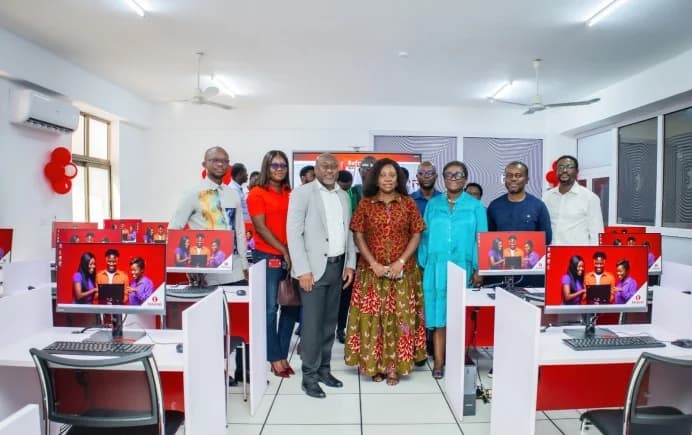
In tandem with its scholarship efforts, Telecel Ghana has significantly invested in physical digital infrastructure. At the University of Ghana, the company recently commissioned a modern 42-unit computer laboratory equipped with an 86-inch interactive touchscreen and dedicated internet connectivity. This facility is part of a long-standing strategic partnership dating back to 2010, designed to enhance research and digital learning capabilities for students. University representatives noted that the lab would be instrumental in preparing students for a digitally empowered workforce, aligning with national goals for technological advancement.
Beyond the tertiary level, Telecel has extended its reach to rural communities through its Employee Volunteerism Programme (EVP). In the Asuogyaman District of the Eastern Region, employees contributed funds to refurbish and equip a 20-unit ICT laboratory for Asikuma Presby Primary and surrounding schools. This "Red Hearts" initiative provides primary students with their first practical exposure to technology. Komla Buami, Director of External Affairs, and Rita Agyeiwaa Rockson, Head of Foundation, urged the community to maintain the facility to ensure its longevity. The project marks the second major community ICT lab donation by the foundation in 2023, following a similar project in May.
These integrated efforts—combining high-level scholarships with grassroots infrastructure development—illustrate a holistic approach to corporate social responsibility in the education sector. By providing both the tools for digital literacy and the financial pathways for advanced engineering studies, Telecel Ghana is positioning itself as a central player in developing the human capital necessary for the country's future. The success of these programs now hinges on the continued maintenance of the new facilities and the active participation of the academic community in utilizing these resources to their full potential.
This story touches markets covered on Anansi Intelligence ↗.
More from education
Continue exploring similar stories


