Ghana News AI
HomeBriefsAsk GhanaTopicsTools
•
•

Stay Informed

Get AI-curated news briefs from Ghana delivered to your inbox every morning. Free forever, no spam.

Explore

  • Home
  • Briefs
  • About

Categories

  • Politics
  • Business
  • Sports
  • Entertainment
  • Africa

Features

  • Analysis
  • Cedi Rates
  • Dollar to Cedi
  • Ghana Gold Price
  • BoG Policy Rate

Topics

  • Armed Forces Recruitment
  • WAEC Results & News
  • Nana Ama McBrown
  • NDC News
  • All Topics

Legal

  • Privacy Policy
  • Terms of Service
Ghana News AI© 2026. All rights reserved.
Made withfor Ghana
technology

Telecel Ghana Introduces Biodegradable Eco-SIMs to Reduce Plastic Waste

6th August•2 min read•2 sources
Telecel Ghana Introduces Biodegradable Eco-SIMs to Reduce Plastic Waste
  1. Home
  2. /Technology
  3. /Telecel Ghana Introduces Biodegradable Eco-SIMs to Reduce Plastic Waste

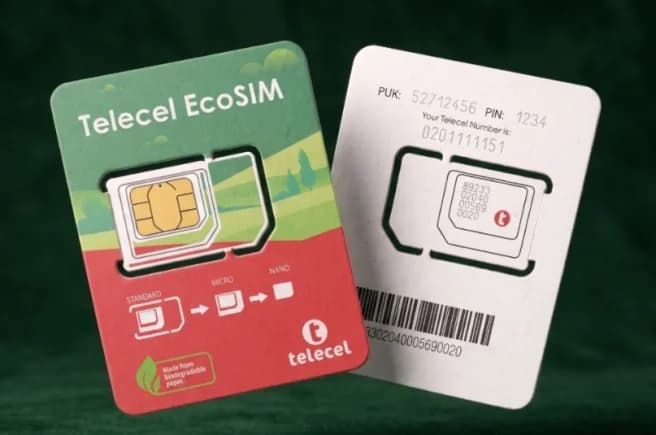
Telecel Ghana has officially launched a biodegradable "Eco-SIM" card, marking a significant step toward environmental sustainability in the country's telecommunications sector. Designed to use 90% less plastic than traditional SIM cards, the new product aims to mitigate the ecological footprint of the millions of plastic chips produced and discarded annually. With Ghana currently hosting over 43 million active mobile connections, the introduction of this sustainable alternative addresses a growing plastic waste concern while maintaining the reliable connectivity services expected by consumers.

The initiative responds to a staggering global production scale, with an estimated 3.7 billion physical SIM cards manufactured in 2024 alone. By transitioning to the Eco-SIM, Telecel Ghana is encouraging responsible consumer choices among its vast user base. Aneth Muga, Telecel’s Director of Consumer Business, and Komla Buami, Director of External Affairs, have emphasized that every Eco-SIM user contributes directly to climate action. They noted that the card provides the same high-quality network performance as standard SIMs, ensuring that environmental consciousness does not come at the cost of service reliability.

This rollout is not an isolated event but rather a key component of Telecel Ghana’s broader commitment to green technology and environmental stewardship. The company’s sustainability portfolio already includes the transition of network infrastructure to solar-powered hubs and the implementation of various reforestation projects across the nation. As the telecommunications industry faces increasing pressure to adopt circular economy principles, Telecel’s shift toward biodegradable materials sets a significant precedent for other mobile network operators in the region, aligning technological growth with ecological preservation.

Our Take

From the Team

Coming Soon

Our team will add key insights, trends, and actionable takeaways to help you stay informed faster.

This story touches markets covered on Anansi Intelligence ↗.

More from technology

Continue exploring similar stories

Daniel Afari Danquah (3rd from right), Co-founder and CEO of Mood Data Services Limited, presenting the items to Major General Maxwell Obuba Mantey (6th from right), Director-General of NACOC. With them are some staff of NACOC and Mood Data Services Limited
technology|2 days ago

Narcotics Control Commission Receives Major Tech Boost from MDSL to Enhance Drug Enforcement

Mood Data Service Limited (MDSL) has made a significant contribution to Ghana's fight against drug trafficking by donating an extensive suite of IT equipment to the Narcotics Control Commission (NACOC). This strategic donation is aimed at modernizing the commission’s operational capacity, specifically targeting improvements in surveillance, enforcement, and public education. As law enforcement agencies increasingly rely on digital infrastructure to combat sophisticated crime networks, this private-sector support arrives at a critical time for the commission’s digital transformation. The donated hardware includes 50 laptops, iPads, printers, servers, UPS units, projectors, and computers. Notably, the package also includes a drone, which is expected to significantly augment NACOC's aerial surveillance capabilities in hard-to-reach areas. Maj. Gen. Maxwell Obuba Mantey, the Director-General of NACOC, emphasized that the commission’s primary mandate is to protect citizens from the scourge of narcotics rather than to intimidate them. He acknowledged that while government resources are often stretched thin, such contributions from corporate partners are essential for maintaining high standards of record-keeping and ensuring Ghana remains compliant with international narcotics control protocols. The partnership between MDSL and NACOC is a continuation of previous collaborations, such as the development of a medical screening data-capture portal. Daniel Afari Danquah, the CEO of MDSL, revealed that the company is looking to deepen this relationship by developing a comprehensive national incident reporting system. This upcoming digital platform is designed to provide more effective monitoring of narcotics-related incidents across the country, allowing for real-time data analysis and more informed decision-making by enforcement officers. This donation highlights the growing importance of public-private partnerships in bolstering national security and law enforcement in Ghana. As the Narcotics Control Commission seeks to strengthen its technological infrastructure, the shift toward digitized surveillance and reporting is expected to enhance transparency and operational efficiency. By equipping NACOC with modern tools, MDSL is helping to ensure that the commission can more effectively fulfill its duty to the Ghanaian public while meeting the evolving challenges of the global anti-drug landscape.

Spotify to Label Synthetic Artist Profiles with New 'AI Persona' Tag for Greater Transparency
technology|2 days ago

Spotify to Label Synthetic Artist Profiles with New 'AI Persona' Tag for Greater Transparency

Spotify is introducing a new "AI Persona" label to distinguish synthetic artist profiles from human creators, marking a significant shift in how the streaming giant manages digital identities. This initiative aims to increase transparency on the platform by clearly identifying accounts that utilize AI-generated names, images, or synthetic personas. By implementing this system, Spotify seeks to address growing listener frustrations and industry concerns regarding the potential for non-human creators to mislead audiences about their origin and authenticity. The labeling process features a rigorous two-step verification system designed to ensure accuracy. Initial automated screenings will flag potential synthetic profiles, which are then subjected to a human moderation review before the "AI Persona" tag is finalized. Once an artist is labeled with this designation, they will face substantial visibility restrictions; specifically, these accounts will be excluded from Spotify’s influential editorial playlists and removed from algorithmic recommendations. This policy ensures that human-led artistry remains the primary focus of the platform's discovery tools. This strategic move comes in response to mounting pressure from the global music industry for clearer identification of AI-assisted and AI-generated content. Stakeholders have expressed concern that the proliferation of synthetic music could undermine the economic and emotional value of human-created work. By segregating AI personas from mainstream recommendations, Spotify is attempting to balance the inevitable rise of technological innovation with the necessity of preserving artistic integrity. Early feedback from musicians and fans has been largely supportive, with many advocates emphasizing that the value of music is rooted in the unique emotional connection between human artists and their listeners. As generative technology continues to evolve rapidly, Spotify’s new labeling framework sets a vital precedent for how digital streaming services navigate the intersection of artificial intelligence and creative expression, ensuring that fans can make informed choices about the content they consume.

Google Launches Gemini 3.7 Flash to Advance AI Coding and Business Automation
technology|14th August

Google Launches Gemini 3.7 Flash to Advance AI Coding and Business Automation

Alphabet Inc.’s Google has officially introduced Gemini 3.7 Flash, the latest iteration of its artificial intelligence models designed specifically to accelerate software development and streamline complex business operations. This launch represents a strategic push by Google to provide developers and enterprises with faster, more efficient tools for "agentic" workflows—automated systems capable of completing multi-step tasks with minimal human intervention. As the global AI race intensifies, Gemini 3.7 Flash is positioned as a high-performance solution for those seeking to integrate sophisticated automation into their daily digital infrastructures. The new model places a heavy emphasis on coding capabilities, aiming to reduce the friction developers face when building and debugging software. By enhancing its reasoning capabilities, Google intends for Gemini 3.7 Flash to handle more nuanced instructions than its predecessors. Beyond mere text generation, the model is engineered to support "agent workflows," which are increasingly seen as the next frontier in AI. These workflows allow the AI to act more like an assistant that can navigate different software environments, manage data, and execute tasks autonomously, providing a significant productivity boost for corporate users. Despite the excitement surrounding the release of 3.7 Flash, industry analysts and investors remain focused on the status of the highly anticipated Gemini 3.5 Pro. Google had previously indicated in July that the 3.5 Pro model was undergoing rigorous testing with select partners and would be available "soon." However, the lack of a firm release date for the Pro version has raised questions about the development timeline within Google’s DeepMind AI unit. Investors are closely watching these release cycles to gauge how effectively Google can maintain its competitive edge against formidable rivals such as OpenAI and Anthropic, both of which have been aggressive in rolling out advanced reasoning models. Looking ahead, the introduction of Gemini 3.7 Flash underscores Google's commitment to a multi-tiered AI strategy, offering specialized models for different performance needs. While Flash models are typically optimized for speed and cost-efficiency, the broader tech community continues to wait for the more powerful flagship updates that will define the next phase of generative AI. For now, the focus shifts to how quickly developers adopt the 3.7 Flash model and whether its performance in coding and automation can solidify Google’s position as a leader in the rapidly evolving enterprise AI market.

Ghana to Deploy One Million Smart Meters as Artificial Intelligence Reshapes Energy Management
technology|14th August

Ghana to Deploy One Million Smart Meters as Artificial Intelligence Reshapes Energy Management

Ghana is positioning itself at the forefront of the technological revolution in energy management with a strategic plan to install one million smart meters. This initiative is part of a broader shift toward integrating Artificial Intelligence (AI) and the Internet of Things (IoT) to optimize the country's energy production, distribution, and consumption. By leveraging computational algorithms, Ghana aims to transition from traditional energy models to a more resilient smart grid system, mirroring successful digital energy initiatives seen in other African nations like Nigeria and Kenya. The technical sophistication of these AI-driven systems allows for precise energy forecasting and dynamic pricing, which are crucial for balancing peak loads and reducing operational costs. Through machine learning and the use of digital twins—virtual replicas of physical energy assets—utility providers can conduct predictive maintenance, identifying potential faults before they lead to blackouts. Pilot projects, including those in student housing, have already demonstrated the potential of these technologies to significantly lower energy consumption and improve overall reliability. Despite the clear benefits, the implementation of AI and smart technologies in Ghana faces several hurdles. Infrastructure limitations, poor data quality, and financial constraints remain significant barriers to a nationwide rollout. Furthermore, there is an urgent need for skilled personnel capable of managing complex edge-cloud processing and cybersecurity frameworks. Addressing these challenges will require a concerted effort to enhance regulatory frameworks and foster institutional collaborations that can attract the necessary investment for digital transformation. Looking ahead, the future of Ghana's energy sector depends on the development of scalable AI solutions that are economically viable and secure. Experts recommend that the government establish a comprehensive strategy for digital energy management to guide the integration of these smart technologies. By prioritizing cybersecurity and conducting thorough economic evaluations, Ghana can ensure that its smart grid infrastructure not only meets current demand but is also capable of adapting to future technological advancements under the administration of President John Mahama.

All
africa
business
education
entertainment
health
news
politics
sports
technology