••
Supreme Court Nominees Face Vetting as Judiciary Clears Path for $2 Million Skytrain Corruption Trial
•3 min read•9 sources
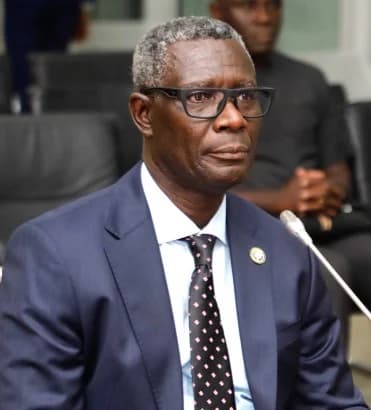
Ghana's judicial landscape is undergoing significant transformation as Parliament continues the vetting of Supreme Court nominees and the judiciary clears the way for high-profile corruption cases to proceed. The Supreme Court recently dismissed an application by Solomon Asamoah, the former CEO of the Ghana Infrastructure Investment Fund (GIIF), who sought an interlocutory injunction to halt his trial in the Accra High Court. Justice Senyo Dzamefe ruled that Asamoah's application lacked merit, stating that the issues raised were more appropriate for an appeal than an injunction. Asamoah, alongside Professor Christopher Ameyaw-Akumfi, faces charges regarding an unauthorized $2 million payment for the Skytrain project, a case that has drawn intense public scrutiny regarding the management of public funds.
Simultaneously, Parliament’s Appointments Committee has been vetting several nominees for the apex court, revealing diverse perspectives on the future of Ghana’s legal system. Justice Anthony Forson Jnr, a former President of the Ghana Bar Association, voiced strong opposition to capping the number of Supreme Court justices, arguing that the court’s heavy workload requires flexibility. Justice Edward Amoako Asante also appeared before the committee, where he opposed calls for a separate Bail Act, asserting that current laws are sufficient if properly applied. However, Justice Asante’s vetting was marked by a walkout from the Minority caucus, who raised objections regarding the nomination process. Additionally, nominee Justice Sophia Rosetta Bernasko Essah defended the court’s constitutional right to depart from its own precedents to rectify injustices and ensure legal consistency.
The legal reforms extend beyond the Supreme Court to the revival of the tribunal system under the new Tribunals Act. Godwin Edudzi Tamakloe, the NDC’s Director of Legal Affairs and CEO of the National Petroleum Authority, has moved to allay fears that these tribunals could be used as tools for political persecution. Tamakloe emphasized that the finalized law significantly curtails executive influence, noting that while the President nominates the tribunal chair based on Judicial Council advice, the Chief Justice appoints the remaining panel members. While legal practitioners like Martin Kpebu have expressed concerns about the inclusion of non-lawyers on these panels, the government maintains that the system is constitutionally sound and designed to enhance the efficiency of justice delivery.
These developments collectively signal a period of intense legal and political activity under President John Mahama’s administration. As the High Court prepares to hear the defense in the Skytrain case on September 23, 2026, and the Court of Appeal considers further stays of proceedings, the focus remains on the independence of the judiciary. The outcome of the ongoing vettings and the practical implementation of the Tribunals Act will likely define the relationship between the executive and the judicial branches, balancing the drive for accountability with the protection of human rights and judicial stability.
Related topic
NDC (National Democratic Congress): Latest News →

