••
Prof. Stephen Adei and EduWatch Advocate for Systemic Education Review Amid WASSCE Performance Concerns
•2 min read•6 sources
Prominent education experts and advocacy groups are calling for a comprehensive review of Ghana’s education system following recent West African Senior School Certificate Examination (WASSCE) results. Professor Stephen Adei, former Rector of GIMPA, and Africa Education Watch (EduWatch) have both dismissed suggestions that the current grading system is responsible for student failures. Instead, they argue that the national discourse must shift toward addressing declining academic standards, systemic placement flaws, and a foundational literacy crisis that continues to hamper student progress.
Professor Stephen Adei asserted that the WASSCE grading system has remained consistent over time and cannot be blamed for the fluctuations in candidates' performance. While acknowledging that the marking process could be simplified for greater clarity, Adei emphasized that the core issues likely stem from the school placement system or a broader dip in educational quality. Echoing this sentiment, Kofi Asare, the Executive Director of EduWatch, argued that the grading curve naturally categorizes students into different performance levels. He stressed that stakeholders—including the government, teachers, and parents—must accept collective responsibility for poor outcomes rather than focusing on the mechanics of the grading curve.
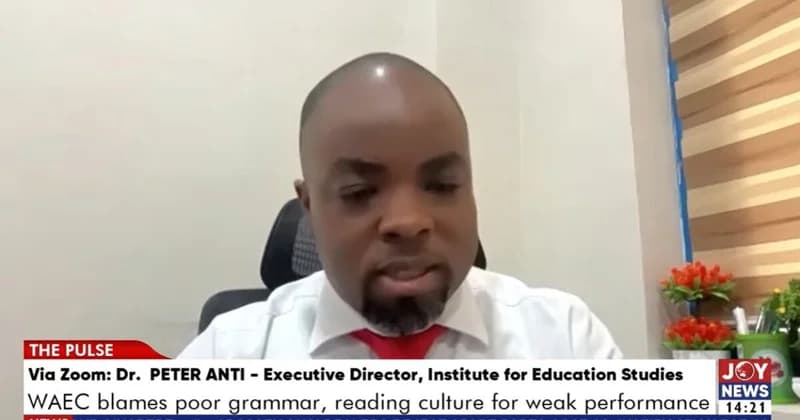
The call for reform is further bolstered by Dr. Peter Anti, Executive Director of the Institute for Education Studies, who highlighted a growing literacy and numeracy crisis in the country. Dr. Anti pointed to the poor performance in English Language and Mathematics as a symptom of deep-seated foundational gaps. The scale of the challenge is underscored by the fact that approximately 55,000 Basic Education Certificate Examination (BECE) candidates failed to qualify for advancement due to deficiencies in these core subjects. Dr. Anti advocated for urgent interventions at the basic education level to ensure students possess the necessary skills before reaching higher levels of academic study.
Beyond academic standards, EduWatch has also called for administrative improvements within the West African Examinations Council (WAEC). Kofi Asare urged WAEC to conclude all investigations into suspected examination malpractice before releasing results, noting that the current practice of withholding results during investigations can prevent students from meeting tertiary admission deadlines. Although such a shift might cause initial delays, Asare suggested that enhancing WAEC’s operational capacity could expedite the process. Ultimately, these experts conclude that without a fundamental shift toward improving learning outcomes and systemic efficiency, the cycle of poor examination performance is likely to persist.