••
St. Monica’s College Celebrates 95 Years as Education Advocacy and Student Competitions Highlight Ghana’s Development Goals
•3 min read•3 sources
Educational stakeholders in Ghana are intensifying efforts to use school-based initiatives as a catalyst for national development and gender equity. This drive was recently underscored by the 95th-anniversary celebrations of St. Monica’s College of Education, one of the nation's oldest female teacher-training institutions. The milestone served as a platform to reiterate that girls' education remains the most potent tool for sustainable community growth, economic advancement, and social cohesion in Ghana. Most Rev. Dr. Cyril Ben-Smith, the Council Chair of St. Monica’s, emphasized that while progress has been made, cultural attitudes and economic hurdles continue to limit opportunities for girls, making the fight for equal access a fundamental requirement for national progress.
This call for gender-focused empowerment was mirrored in the creative and academic sectors, where the BTS Ghana Research Project held a visual arts contest at the Ghana Library Authority. St. Thomas Aquinas Senior High School emerged as the winner of the competition, which was organized by institutions including the International Centre for Research on Women and the University of Cape Coast. The event was specifically designed to illuminate the unique challenges faced by female artists in the creative industry. St. Mary’s Senior High School and Accra High School secured the second and third positions respectively, following a panel discussion that explored the realities of the professional creative landscape.
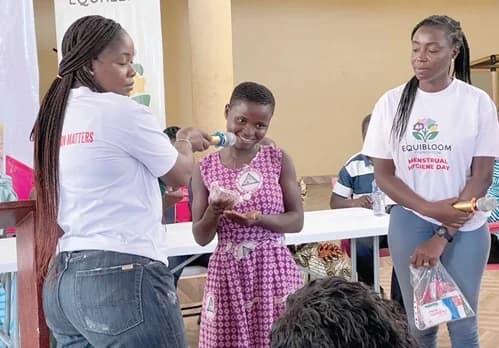
Beyond academic and artistic excellence, holistic education in Ghana is increasingly incorporating health and personal dignity to ensure student retention. At Nkontompo AME Zion School, the Equibloom Foundation organized an intensive session on menstrual hygiene to mark World Menstrual Hygiene Day. Led by founder Ursula Adadzewa Fynn, the program provided pupils with essential knowledge to manage hygiene and debunk common myths. By distributing sanitary pads and pledge cards, the initiative sought to remove the health-related barriers that often lead to school absenteeism among young girls, reinforcing the broader national goal of keeping students in the classroom and protecting their dignity.
These diverse interventions—spanning from high-level advocacy at historic teacher colleges to grassroots health education and competitive creative arts—illustrate a comprehensive approach to youth development in Ghana. As research findings from the BTS project are set for wider dissemination later this month, the focus remains on building an educational ecosystem that supports every student’s potential regardless of gender. Stakeholders agree that bridging the gap in both professional and personal spheres is essential for ensuring that Ghana's educational system translates into tangible social and economic benefits for the next generation.
This story touches markets covered on Anansi Intelligence ↗.
More from education
Continue exploring similar stories


