••
South African Migrant Communities Face Rising Tensions Amid Anti-Immigration Deadline
•2 min read•9 sources
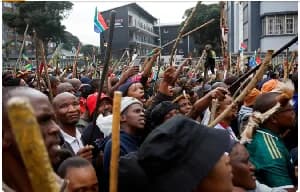
An impending September 30 deadline issued by the anti-immigration movement "March and March" has ignited widespread anxiety and fear across migrant and refugee communities in South Africa. The group has led a year-long campaign of protests demanding the immediate expulsion of undocumented foreign nationals, accusing the government of failing to enforce immigration laws. While the deadline lacks formal legal authority, its psychological impact has been profound, creating a climate of volatility that has already resulted in reported violence, injuries, and at least 27 deaths in recent shooting incidents related to xenophobic tensions.
The humanitarian situation is particularly dire near the Durban Refugee Reception Centre, where hundreds of displaced persons from the Democratic Republic of Congo, Burundi, and Mozambique are living in makeshift encampments. These individuals, many of whom have fled conflict in their home countries, report being excluded from basic services and facing hostility even when possessing valid asylum documentation. The vulnerability of those advocating for migrant rights has also come into sharp focus; Bishop Raphael Bahebwa, a prominent advocate for foreigners, has reportedly gone into hiding following multiple threats against his life for his public stance on the crisis.
In response to the mounting pressure, South African authorities have intensified immigration enforcement and begun clearing makeshift camps. Displaced migrants are being presented with stark choices: return to the neighborhoods they fled or accept relocation to the Lindela Repatriation Centre, a distant detention facility. Human rights activists and community leaders have criticized these measures, noting that they often fail to distinguish between undocumented migrants and legal refugees. There is a growing consensus among observers that the police have been largely ineffective in protecting vulnerable foreign nationals from targeted violence.
As the September 30 deadline approaches, many analysts point to upcoming local elections as a primary driver of the escalating rhetoric. There are concerns that anti-foreigner sentiment is being leveraged for political gain, further complicating the search for a sustainable solution. Moving forward, activists are calling for urgent institutional accountability and structured community dialogue to prevent a repeat of historical xenophobic violence. The current environment highlights a critical need for South African policy to balance national security with the fundamental human rights of those seeking refuge within its borders.


