••
Shengyuan Carpet: Bridging Tibetan Craftsmanship and Modern Industrial Innovation in Qinghai
•2 min read•6 sources
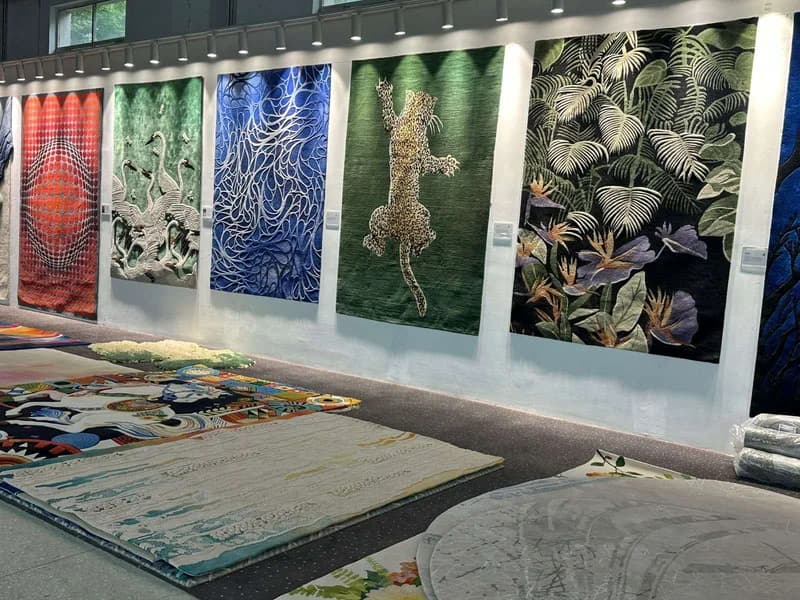
In the heart of Xining, Qinghai Province, the Shengyuan Carpet company has emerged as a landmark of industrial transformation, successfully marrying centuries-old Tibetan craftsmanship with cutting-edge manufacturing technology. This fusion represents a strategic shift in China’s Western industrial development, where intangible cultural heritage is not merely preserved but scaled for the modern global market. By producing a diverse range of products—from meticulously hand-knotted rugs to high-volume, machine-made Axminster carpets—Shengyuan demonstrates how traditional art forms can thrive within a modern commercial ecosystem without losing their historical essence.
Central to the company’s operations is a strong commitment to social inclusion and regional economic stability. Shengyuan employs approximately 338 staff members, with women comprising 70% of the workforce. This focus on gender inclusivity provides vital professional opportunities in rural areas, allowing women to play a leading role in both the preservation of cultural techniques and the management of modern industrial processes. The Tibetan carpet sector has thus become an essential pillar for rural employment, turning localized skills into a sustainable source of income and empowerment for hundreds of families across the province.
The technological integration at Shengyuan is a key driver of its international competitiveness. The facility utilizes advanced tools, including Artificial Intelligence and sophisticated industrial machinery, to meet the rigorous demands of global trade. This industrial capacity allows for the production of nearly one million square metres of Axminster carpets annually. However, the company maintains a careful balance by continuing to produce limited quantities of traditional hand-knotted carpets. This dual-track approach ensures that while the enterprise achieves the scale required for international markets, the intricate precision of traditional Tibetan weaving is maintained as a living art form.
As Qinghai continues to position itself as a hub in the national industrial strategy, Shengyuan Carpet serves as a blueprint for balancing economic growth with cultural identity. By adapting historical techniques to contemporary industrial needs, the enterprise ensures that the region’s heritage remains relevant and profitable in an evolving global economy. This model highlights a sustainable path forward where innovation does not replace tradition, but rather provides the infrastructure and global reach necessary for it to endure for future generations.
This story touches markets covered on Anansi Intelligence ↗.
More from business
Continue exploring similar stories


