••
Political Shake-ups in Senegal and Key Governance Milestones in Ghana Define Regional Landscape
•3 min read•53 sources
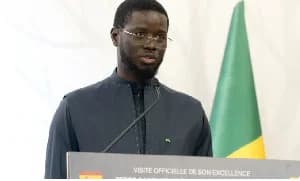
The West African political landscape has been marked by significant upheaval and institutional progress this week. In Senegal, President Bassirou Diomaye Faye has dismissed Prime Minister Ousmane Sonko and dissolved the government, a move that deepens political uncertainty amid a severe economic crisis. The fallout follows months of friction between the former allies and comes as the nation grapples with a staggering debt-to-GDP ratio of 132%. The dismissal has raised concerns regarding the future of a $1.8 billion IMF lending program, which was recently frozen due to misreported debt figures. Despite the dismissal, Sonko’s party, Pastef, continues to hold significant power in the National Assembly, complicating the path for essential reforms and debt restructuring needed for economic recovery.
In Ghana, the executive branch has focused on infrastructure and financial leadership. Vice-President Professor Naana Jane Opoku-Agyemang commissioned 100 new Metro Mass Transit Limited (MMTL) buses, the first phase of a 300-vehicle initiative aimed at alleviating urban congestion and improving rural-urban accessibility. At the commissioning, the Vice-President stressed the necessity of strict maintenance protocols to ensure the longevity of the fleet. Additionally, she inaugurated the ACI World Congress in Accra, where she urged global financial leaders to "put people first." She emphasized that financial markets must serve humanity and advocated for ethical trading and digital trust to protect emerging economies from global volatility.
On the front of national security and accountability, Interior Minister Mohammed Muntaka Mubarak announced that medical examination results for over 105,000 security service applicants will be released next week. While the initial target was 5,000 recruits, the government is considering doubling the intake to address youth unemployment and bolster national safety. Simultaneously, the Volta Regional Minister, James Gunu, assured the Public Accounts Committee (PAC) of stricter supervision for government projects. Citing a zero-tolerance policy for abandoned projects, Gunu highlighted improvements in the Regional Coordinating Council’s monitoring systems to prevent administrative lapses and ensure that contractors have the requisite capacity before work begins.
Institutional oversight has also intensified as the Public Interest and Accountability Committee (PIAC) escalated a long-standing dispute with the Ghana National Petroleum Corporation (GNPC) to the Attorney-General. The conflict involves over US$561 million in petroleum revenues that PIAC alleges have not been properly accounted for. In the legislative sphere, Speaker of Parliament Alban Sumana Kingsford Bagbin called for enhanced unity among Commonwealth nations to tackle global insecurity. These developments, ranging from the resolution of multi-million dollar revenue disputes to the strengthening of regional diplomatic ties, underscore a broader regional trend toward demanding higher standards of transparency and executive accountability.
This story touches markets covered on Anansi Intelligence ↗.
Live rates
Dollar to cedi rate →More from politics
Continue exploring similar stories


