••
Ghana Strengthens Digital Economy and Professional Standards Through Massive Multi-Sector Skills Training Initiatives
•3 min read•4 sources
Ghana is witnessing a comprehensive surge in professional and digital capacity building, with new initiatives targeting university graduates, journalists, artisans, and persons with disabilities. Central to this push is the government's commitment to inclusive growth, highlighted by the Minister for Communications and Digitalisation, Samuel Nartey George, who announced that 50,000 persons with disabilities (PWDs) will be trained under the One Million Coders Programme. This initiative, a collaboration between the Ministry of Communications, the Ministry of Gender, Children, and Social Protection, and the University of Ghana, aims to ensure that the digital economy is accessible to all, fostering entrepreneurship and innovation across diverse social groups.
In tandem with these digital inclusion efforts, the Ghana Communication Technology University (GCTU) recently held a special congregation where Dr. Arnold Kavaarpuo, Executive Director of the Data Protection Commission, challenged graduates to become creators rather than mere consumers of technology. Emphasizing the importance of local infrastructure and intellectual property, Dr. Kavaarpuo urged the new cohort to contribute to the National AI Strategy to secure Ghana’s digital sovereignty. This call to innovation is being matched by institutional reforms at GCTU, where Professor Ebenezer Malcalm noted that programs are being rapidly adapted to meet the shifting demands of the global digital landscape.
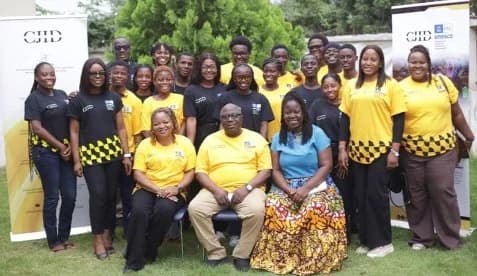
The drive for professional excellence extends into the informal sector and the media. The Design and Technology Institute (DTI) recently graduated over 1,500 Master Craft Persons (MCPs) and Small and Medium Enterprise (SME) owners from its Precision Quality (PQ) training programme. DTI founder Constance Elizabeth Swaniker highlighted that the program equips artisans with vital skills in business management and workplace safety, aiming to formalize Ghana’s informal sector and enhance its regional competitiveness. Simultaneously, twenty student journalists from across the country completed an intensive clinic organized by the Centre for Journalism Innovation and Development (CJID) and UNESCO, focusing on data journalism, fact-checking, and investigative reporting to combat misinformation and improve newsroom standards.
Collectively, these programs represent a strategic investment in Ghana's human capital, bridging the gap between traditional education and the practical requirements of a modern economy. By equipping journalists with verification tools, artisans with precision standards, and PWDs with coding skills, the nation is building a more resilient and inclusive workforce. As these graduates and trainees enter their respective fields, the focus shifts toward the long-term sustainability of these skills and the expansion of such training modules to every corner of the country to ensure no Ghanaian is left behind in the digital age.
This story touches markets covered on Anansi Intelligence ↗.
More from education
Continue exploring similar stories


