••
Minister Samuel Nartey George Outlines Strategy to Combat Chronic Fibre Cuts and Grid Instability
•2 min read•1 source
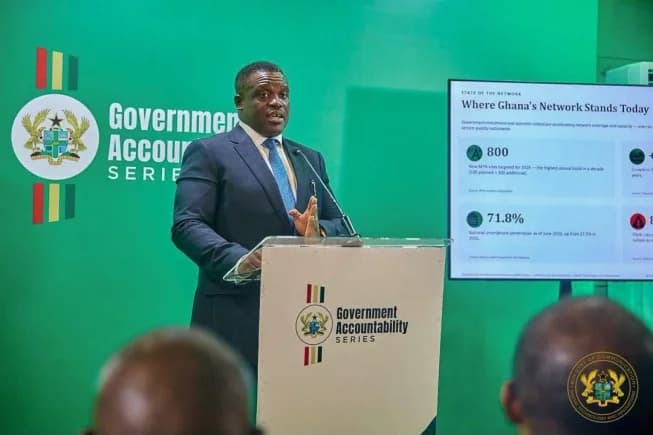
The Minister of Communication, Digital Technology and Innovations, Samuel Nartey George, has identified the twin challenges of frequent fibre optic cable cuts and national power grid instability as the most significant threats to Ghana’s network quality. Speaking on the current state of digital infrastructure, the Minister revealed a troubling trend in service disruptions that continues to affect millions of citizens. Data indicates that during the first half of 2023, the country recorded 4,289 fibre cuts, with projections suggesting that these incidents could rise to over 8,500 annually if the trend remains unchecked. These outages not only frustrate consumers but also undermine the broader digitalization agenda under the current administration.
A significant portion of these infrastructure failures is attributed to road construction projects, where excavation work frequently damages underground fibre lines. To resolve this, the Minister announced that a "Dig Once Policy" is currently pending approval. This policy is designed to streamline infrastructure development by requiring the installation of fibre conduits during the initial phases of road construction. By integrating digital infrastructure into civil works, the government hopes to eliminate the need for subsequent excavations that put existing networks at risk. Additionally, the Ministry plans to enforce stringent penalties against contractors who fail to safeguard telecom assets during their operations.
In addition to physical cable damage, the Ministry is addressing the impact of an unstable power grid on digital services. Minister George noted that collaboration with the Ministry of Energy and GRIDCo is essential to build power resilience, as network stability is inextricably linked to a consistent electricity supply. Despite these operational hurdles, major industry players such as MTN Ghana and Telecel are moving forward with substantial investments. These efforts are focused on modernizing rural connectivity and expanding network capabilities to ensure that even the most remote areas can benefit from reliable digital access as the government works to fortify the national backbone.

