••
Ghana’s Governance Reforms Show Fragile Gains as RTI Commission Fines 254 State Institutions for Non-Compliance
•3 min read•17 sources
Ghana’s journey toward transparent governance is showing signs of progress, though institutional challenges remain significant. Government Statistician Dr. Alhassan Iddrisu recently released the Governance Series Wave 3 Report, revealing a decline in bribery rates from 18.4% to 16.8%. While the report indicates that more Ghanaians feel included in decision-making processes, Dr. Iddrisu warned that these gains remain fragile. This warning is underscored by the Right to Information (RTI) Commission’s recent decision to fine 254 Ministries, Departments, and Agencies (MDAs), as well as Metropolitan, Municipal, and District Assemblies (MMDAs), GH¢20,000 each for failing to submit their 2025 annual reports. This mass sanction highlights a persistent gap between policy and practice in the public sector's commitment to transparency.
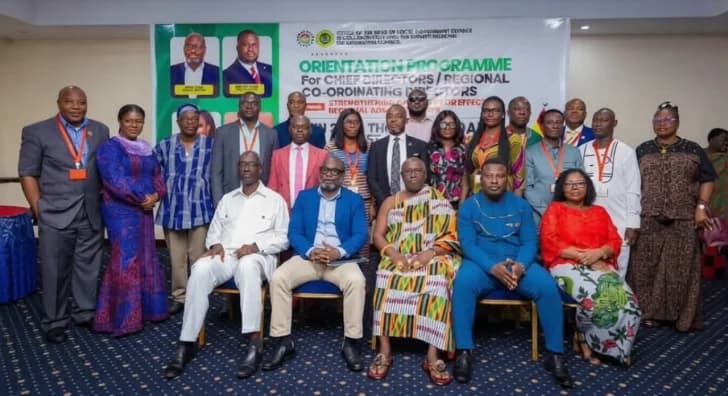
At the local level, leadership is facing mounting pressure to move beyond rhetoric and deliver tangible infrastructure and services. Alfred Asiedu Adjei, President of the National Association of Local Authorities of Ghana (NALAG), cautioned officials at the Ashanti Regional Conference that public trust is eroding due to unmet promises. He urged assemblies to address community-specific issues like flooding and poor roads through data-driven planning and digital technology. Similarly, Professor Lord Mensah, Head of the Local Government Service, emphasized that Chief Directors must embrace innovation and artificial intelligence to improve service delivery. This call for modernization is being tested by citizen-led initiatives, such as the recent RTI request filed by Albert Tomi regarding the proposed 24-hour market at Tsito, which demands transparency in project assessments and site plans.
In tandem with these administrative reforms, the state is cracking down on petty corruption and extortion within its ranks. The Ghana Airports Company Limited (GACL) recently barred two Port Health officers from all managed airports after they were caught charging a passenger double the approved fee for a Yellow Fever Card at Kotoka International Airport. Furthermore, an immigration officer was reassigned after being filmed soliciting money from a traveler. These actions reflect a broader push for accountability, even as critics like J. B. Allotey argue that systemic corruption continues to leave vital public assets, such as completed hospitals, unused due to payment disputes. The narrative of "democracy under attack" has also emerged as a point of contention, with some observers suggesting that legal investigations into former officials are necessary steps for accountability rather than political persecution.
The legal and social fabric of the nation is also undergoing scrutiny as Ghana navigates its human rights obligations. Justice Sir Dennis Dominic Adjei of the African Court on Human and Peoples’ Rights recently argued that mandatory death penalty regimes violate the African Charter on Human and Peoples’ Rights, noting that while Ghana has moved away from mandatory sentences for murder, they remain for treason. Meanwhile, the judiciary faces internal pushback, as lawyers for former National Signals Bureau Director-General Kwabena Adu-Boahene have protested a directive to hear criminal cases during the legal vacation, calling the move discriminatory. As the administration of President John Mahama continues its term, the success of these governance reforms will likely depend on whether the state can transition from "ceremonial" compliance to a culture of genuine public service and institutional integrity.
This story touches markets covered on Anansi Intelligence ↗.
Related topic
John Mahama: Latest News & Updates →More from politics
Continue exploring similar stories


