••
Rotary Club of Kumasi-East Delivers Potable Water Project to Nintin Community
•2 min read•2 sources
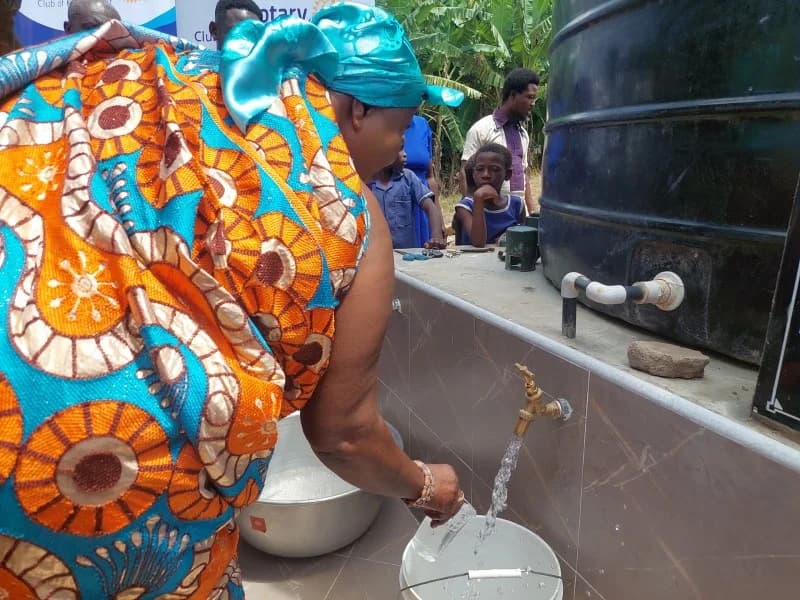
The Rotary Club of Kumasi East has successfully addressed a long-standing water crisis in the Nintin community of the Mampong Municipality by commissioning a new mechanized borehole. This humanitarian project, which cost several thousand Ghana Cedis, provides the community with its first reliable source of potable water. For years, the residents of Nintin were forced to rely on contaminated streams and springs, sources that were increasingly unreliable due to the impacts of climate change and shifting local drainage systems. The inauguration of the new system was met with celebration by local leaders and residents, who see the project as a vital step toward improving public health and socio-economic conditions.
Historically, the reliance on unsafe water sources led to a high prevalence of waterborne diseases and placed significant daily burdens on the community, particularly on women and children. By installing a mechanized system, the Rotary Club has provided a sustainable solution that ensures clean water is readily available. Beyond the water infrastructure, the club also demonstrated its commitment to the holistic development of the community by donating educational materials to local children, emphasizing that access to basic resources is fundamental to educational success and community growth.
During the commissioning ceremony, community leaders expressed profound gratitude for the intervention but also highlighted ongoing challenges within the municipality. They made a formal request for additional support to provide modern toilet facilities for local schools, noting that sanitation remains a critical concern for students and staff. The Rotary Club noted that these initiatives align with their core global objectives of enhancing water and sanitation standards in underserved areas, reaffirming their dedication to humanitarian service across the Ashanti Region.
The sustainability of the mechanized borehole now depends on the community's commitment to its upkeep. Local leaders have emphasized the importance of maintaining the infrastructure to ensure it serves future generations. This project serves as a clear example of how strategic partnerships between humanitarian organizations and local communities can bridge critical infrastructure gaps, ultimately fostering a healthier and more resilient environment for rural populations in Ghana.
