••
Pharmaceutical Society of Ghana Calls for Collaboration Following Forced Pharmacy Closure in Cape Coast
•3 min read•4 sources
The Pharmaceutical Society of Ghana (PSGH) has intensified its call for stronger collaboration among health sector stakeholders while simultaneously condemning the forced closure of a community pharmacy in Cape Coast. Speaking at the fourth Community Pharmacy Month celebration in Accra, PSGH President Dr. Paul Owusu Donkor emphasized that the interconnectedness of healthcare professionals is vital for improving delivery across the country. He urged an end to internal professional conflicts, advocating instead for a unified front to better serve the Ghanaian public. This call for unity comes at a critical time as the society navigates both regulatory challenges and administrative interference in the provision of essential medicines.
The society’s advocacy follows a controversial incident in Cape Coast, where Municipal Chief Executive (MCE) George Justice Arthur reportedly ordered the closure of Cape Coast Pharmacy during a National Sanitation Day clean-up exercise. A video of the event showed the MCE evicting patients to enforce the cleanup, an act the PSGH has labeled a "harmful disruption" to essential healthcare services. Dr. Donkor expressed grave concern over the incident, asserting that community pharmacies are primary healthcare providers that must remain accessible even during local cleanup activities. The PSGH has called for better consultation between local authorities and health professionals to ensure that such essential services are recognized and protected in future municipal planning.
Beyond the incident in Cape Coast, the PSGH is focusing on elevating the standards of the profession to improve overall healthcare outcomes. During the recent celebrations in Accra, Dr. John Allotey, co-founder of Allotey and Associates, highlighted the necessity of effective communication between pharmacists and their clients to foster lasting relationships. Additionally, Dr. Therestella Obosu Tei-Kwabla, Chairperson of the Community Practice Pharmacists Association (CPPA), encouraged members to continuously upgrade their knowledge. She noted that as the crucial link between formal healthcare facilities and the public, pharmacists must maintain the highest standards of service quality to safeguard patient well-being.
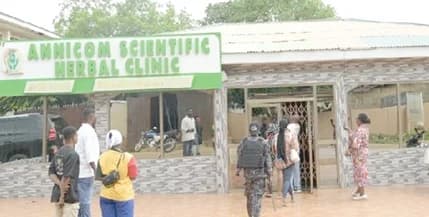
While the PSGH seeks to protect legitimate providers, regulatory bodies are also cracking down on non-compliance within the broader health sector. In the Upper East Region, the Traditional Medicine Practice Council (TMPC) recently shut down three unlicensed facilities in the Bolgatanga Municipality. The affected clinics—Annicom Scientific Herbal Clinic, NIDA Homoeopathic Clinic, and Amen Scientific Herbal Hospital—were found to be operating without valid licenses and had committed multiple regulatory breaches over several years. Dr. Evelyn Abayaah-Issah, the TMPC’s acting Administrative Secretary, stressed that these closures are necessary to safeguard public health and ensure that only authorized practitioners provide care.
These developments underscore the dual challenge facing Ghana’s health sector: the need for administrative respect for professional healthcare spaces and the urgent requirement for strict regulatory compliance. As the PSGH urges pharmacy owners to manage staff effectively during national exercises to avoid further friction with local authorities, the TMPC continues to monitor the landscape for unlicensed practitioners. Together, these efforts by professional societies and regulatory councils highlight an ongoing commitment to creating a safer, more collaborative, and highly regulated healthcare environment for all Ghanaians.
This story touches markets covered on Anansi Intelligence ↗.
More from health
Continue exploring similar stories


