••
Petroleum Hub Development Corporation Secures Qatari Partnership as Stanbic Bank and Zoomlion Bolster Sustainability and Operational Excellence
•3 min read•7 sources
The Petroleum Hub Development Corporation (PHDC) has reached a significant milestone in its mission to transform Ghana’s energy landscape by signing a Memorandum of Understanding (MoU) with the Qatari-based Al Kaabi Holding Group. This strategic partnership, formalized by PHDC Chairman Dr. Toni Aubynn and Al Kaabi Holding Group Chairman Muhammad Mubarak Al Kaabi on July 13, 2026, positions Ghana as a premier destination for international petroleum investment. Dr. Aubynn cited the nation’s stable investment climate and strategic geographic location as the primary drivers behind the agreement, while the Qatari conglomerate expressed strong confidence in the project’s capacity to foster mutual economic growth through infrastructure development.
Alongside these long-term energy investments, local corporate leaders are demonstrating robust operational readiness and environmental stewardship. Zoomlion Ghana Limited has reassured the public of its full capacity to manage the significant waste volumes generated by recent national cleanup exercises following seasonal floods. Operations Manager Naa Ayorkor Koney highlighted the efficiency of the Teshie Waste Transfer Station, which services four Metropolitan, Municipal, and District Assemblies (MMDAs), as a key component in maintaining urban sanitation. Supported by CEO Dr. Joseph Siaw Agyepong, the company has committed to continuing its evacuation operations until all flood-hit areas are cleared, showcasing the critical role of private sector infrastructure in disaster management and public health.
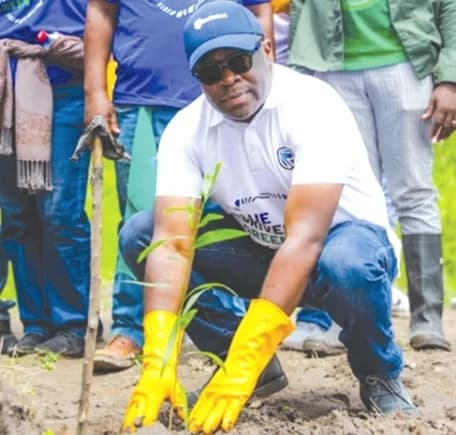
In a parallel effort toward environmental sustainability, Stanbic Bank Ghana has intensified its climate action through a large-scale initiative to plant 50,000 trees this year. CEO Kwamina Asomaning emphasized that the bank’s strategy is to merge economic development with environmental responsibility, aiming for a long-term goal of one million trees to align with global net-zero targets. This initiative, which recently saw 10,000 trees planted across Chipa, Juaso, and Tamale, reflects a growing trend among Ghanaian financial institutions to integrate Environmental, Social, and Governance (ESG) criteria into their core business models, ensuring that the drive for profit does not come at the expense of ecological health.
As Ghana navigates these industrial and environmental developments, the broader business community is also grappling with the rapid integration of artificial intelligence and international trade opportunities. Experts highlight a pressing need for Human Resources professionals to adapt to an AI-driven economy, where traditional job designs are being challenged by productivity shifts and the emergence of 'ghost workdays.' Simultaneously, looking ahead to late August 2026, the F Istanbul exhibition in Türkiye presents a vital platform for Ghanaian food and beverage players to explore B2B networking and global trade partnerships. Together, these developments underscore a dynamic period for the Ghanaian economy, characterized by high-value international collaborations, technological adaptation, and a renewed focus on sustainable infrastructure.
This story touches markets covered on Anansi Intelligence ↗.
More from business
Continue exploring similar stories


