••
Vice President Opoku-Agyemang Tours Flood-Hit Accra as MP Proposes National Disaster Fund
•3 min read•9 sources
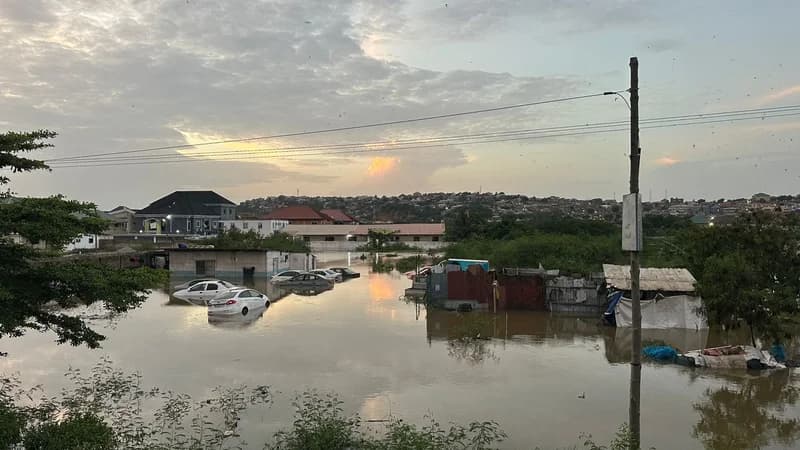
In the wake of devastating heavy rains that have once again submerged parts of the capital, Her Excellency the Vice President, Professor Naana Jane Opoku-Agyemang, has commenced an extensive tour of flood-affected communities across Accra. The visit is designed to provide the executive branch with a firsthand assessment of the property damage and displacement caused by the recent downpours. During her tour, the Vice President is scheduled to interact with residents, community leaders, and emergency response teams to evaluate the effectiveness of ongoing relief efforts and to reinforce the government’s commitment to immediate humanitarian support and long-term risk mitigation.
Parallel to the executive response, Dr. Kingsley Agyemang, the Member of Parliament for Abuakwa South, is advocating for a structural shift in how Ghana finances its disaster response. Drawing inspiration from international models in Japan and Mexico, Dr. Agyemang has proposed the establishment of a National Disaster Risk Management Fund. He suggests that such a fund should be sustained through a combination of dedicated government budgetary allocations, special taxes, and mandatory corporate social responsibility contributions, particularly from the mining sector. This initiative aims to move the nation beyond ad-hoc disaster management toward a more resilient and proactive financial framework for reconstruction and victim support.
The timing of the current crisis has also reignited a national conversation regarding the recurring nature of flooding in early June, a pattern that has haunted the country since the catastrophic 2015 disaster. Presidential Staffer Nana Yaa Jantuah has called for a comprehensive investigation into these patterns, urging authorities to look beyond just the physical causes like choked drains and poor waste disposal. Jantuah argued for a multi-dimensional examination that includes policy failures, social behaviors, and even spiritual perspectives to understand why significant flooding consistently coincides with this specific time of year. She emphasized that without stricter enforcement of urban planning and sanitation regulations, the cycle of destruction will likely continue.
As the Vice President concludes her assessment, the dual focus on immediate relief and legislative reform highlights the growing political pressure to find a permanent solution to Ghana’s drainage challenges. The government is expected to use the findings from this tour to coordinate better between local authorities and emergency responders, while Parliament considers the merits of a dedicated disaster fund. For now, the focus remains on supporting the thousands of citizens displaced by the rains and ensuring that the lessons of this most recent flood lead to more than just temporary fixes.
This story touches markets covered on Anansi Intelligence ↗.
More from politics
Continue exploring similar stories


