••
Prof. Opoku-Agyemang Urges Result-Oriented Governance as NDC Marks June 4 Anniversary Amid Internal Succession Debates
•3 min read•20 sources
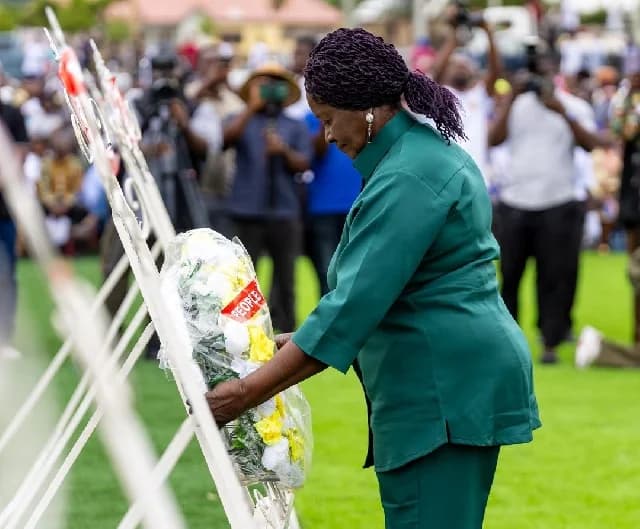
Vice President Professor Jane Naana Opoku-Agyemang has called on government appointees and members of the National Democratic Congress (NDC) to prioritize tangible development and policies that directly improve the lives of Ghanaians. Speaking at the 47th anniversary of the June 4 Uprising in Banda-Ahenkro, Bono Region, the Vice President emphasized that the party’s founding principles of probity, accountability, and social justice must be translated into visible results. The commemoration, themed "Strengthening State Institutions: Lessons from the June 4, 1979 Uprising," served as a platform for the government to highlight its investments in critical sectors including healthcare, education, and road infrastructure, while urging officials to remain focused on delivering their mandates rather than personal political gains.
During the event, NDC leadership also addressed pressing national and economic concerns. National Chairman Johnson Asiedu Nketiah used the occasion to demand justice for victims of the 2024 general election violence, urging the Inspector-General of Police to expedite investigations into the eight reported fatalities. On the economic front, Augustus Goosie Tanoh, Presidential Advisor on the 24-Hour Economy, reached out to the Ghanaian diaspora in the United Kingdom to support the nation’s export-driven industrialization. Tanoh highlighted significant macroeconomic improvements, including a reported drop in inflation to 3.4% and a reduction in public debt, positioning the "24-Hour Economy" policy as a cornerstone for job creation and reduced import reliance.
However, the anniversary coincided with intensifying internal discussions regarding the party's future leadership and discipline. The NDC Council of Elders officially reaffirmed John Dramani Mahama as the party leader and cautioned aspirants against engaging in premature presidential campaign activities for 2028. This warning follows public calls from figures like Kwesi Pratt Jnr for Finance Minister Cassiel Ato Forson to clarify his political ambitions to avoid distracting from the current administration’s agenda. Similarly, Mussa Dankwah of Global InfoAnalytics warned ministers that their political aspirations must not interfere with bureaucratic duties, specifically pointing to recent funding tensions between the Ministries of Finance and Agriculture.
The party also faces internal friction as former Kumbungu MP Ras Mubarak publicly criticized Chairman Asiedu Nketiah’s leadership style, describing it as detrimental to party consensus. Amidst these tensions, some officials are making strategic shifts; Dr. Mark Oliver-Kevor recently resigned as Director-General of the National Information Technology Agency (NITA) to focus on his role as the Eastern Regional Chairman of the NDC. These moves reflect a broader effort within the party to consolidate its base and strengthen internal structures ahead of future electoral challenges.
Ultimately, the June 4 commemoration reinforced a call for principled leadership and institutional strength. Professor Opoku-Agyemang and other party stalwarts concluded by urging Ghanaians to remain active participants in the nation’s democratic and developmental journey. As the NDC navigates the balance between honoring its revolutionary roots and managing contemporary governance pressures, the leadership maintains that the party's success will depend on its ability to remain unified and focused on delivering sustainable, inclusive growth for all citizens.
This story touches markets covered on Anansi Intelligence ↗.
Related topic
NDC (National Democratic Congress): Latest News →More from politics
Continue exploring similar stories


