Ghana News AI
HomeBriefsAsk GhanaTopicsTools
•
•

Stay Informed

Get AI-curated news briefs from Ghana delivered to your inbox every morning. Free forever, no spam.

Explore

  • Home
  • Briefs
  • About

Categories

  • Politics
  • Business
  • Sports
  • Entertainment
  • Africa

Features

  • Analysis
  • Cedi Rates
  • Dollar to Cedi
  • Ghana Gold Price
  • BoG Policy Rate

Topics

  • Armed Forces Recruitment
  • WAEC Results & News
  • Nana Ama McBrown
  • NDC News
  • All Topics

Legal

  • Privacy Policy
  • Terms of Service
Ghana News AI© 2026. All rights reserved.
Made withfor Ghana
politics

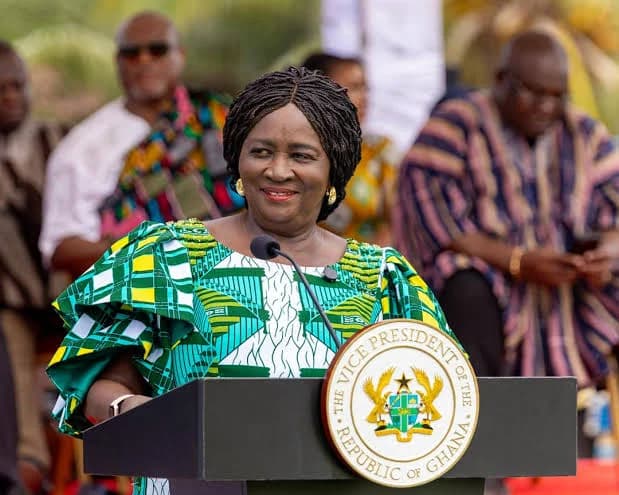
VP Opoku-Agyemang Condemns Early 2028 NDC Flagbearer Debates, Reaffirms Government’s Commitment to Women’s Development Bank

7th August•3 min read•11 sources
VP Opoku-Agyemang Condemns Early 2028 NDC Flagbearer Debates, Reaffirms Government’s Commitment to Women’s Development Bank
  1. Home
  2. /Politics
  3. /VP Opoku-Agyemang Condemns Early 2028 NDC Flagbearer Debates, Reaffirms Government’s Commitment to Women’s Development Bank

Vice President Professor Jane Naana Opoku-Agyemang has issued a stern warning to members of the National Democratic Congress (NDC) against engaging in premature discussions regarding the party's 2028 flagbearer. Speaking on The KSM Show on August 7, 2026, the Vice President characterized early succession maneuvers as a "betrayal" of the mandate given to the government by Ghanaian voters. She emphasized that the party's primary responsibility is to support President John Mahama in fulfilling his administration's promises and addressing the country's immediate challenges, rather than distracting from governance with future political ambitions. She noted that the trust placed in the current government by the public must be respected through diligent service.

During her media appearance, Prof. Opoku-Agyemang underscored that the NDC's future electoral success depends entirely on its current performance and its ability to deliver on the promises made during the 2024 campaign. She criticized the distraction of internal campaigning, arguing that it undermines the extensive work that went into the policy proposals led by President Mahama. "Whether we are going or coming depends on the work we are doing," she stated, urging party officials and volunteers to remain focused on the task of national development. The Vice President warned that deviating from this focus to pursue individual presidential ambitions could erode the hard-won confidence the electorate has in the administration.

Beyond internal party politics, the Vice President provided a significant progress report on a flagship economic initiative: the Women's Development Bank. She confirmed that the government remains fully committed to launching the institution by the end of 2026. The bank is specifically designed to provide financial services to women in the informal sector who are often excluded from traditional banking due to a lack of collateral or formal financial records. Prof. Opoku-Agyemang highlighted the bank as a pillar of President Mahama’s agenda for economic recovery and social equity, ensuring that those at the lowest economic levels are empowered through targeted fiscal support and skills development.

The Vice President also touched upon moments of crisis and international diplomacy, reflecting on the emotional toll of a recent fatal helicopter crash that claimed the lives of several senior government officials. She described the shock and disbelief she felt upon hearing the news but emphasized the need for calm leadership to guide the nation through such tragedies. On the diplomatic front, she recently met with the outgoing Brazilian Ambassador, Mariana Gonçalves Madeira, to reaffirm the strong partnership between Ghana and Brazil. The Vice President thanked the Ambassador for her contributions to bilateral cooperation in energy and agriculture, signaling that the Mahama administration remains focused on both internal stability and critical international development goals.

Our Take

From the Team

Coming Soon

Our team will add key insights, trends, and actionable takeaways to help you stay informed faster.

This story touches markets covered on Anansi Intelligence ↗.

Related topic

NDC (National Democratic Congress): Latest News →

More from politics

Continue exploring similar stories

Sammi Awuku Denies EOCO Arrest Reports as COPEC Proposes Technical Oversight for State Contracts
politics|Yesterday

Sammi Awuku Denies EOCO Arrest Reports as COPEC Proposes Technical Oversight for State Contracts

Sammi Awuku, the Member of Parliament for Akuapem North and former Director-General of the National Lottery Authority (NLA), has strongly refuted reports claiming he was arrested by the Economic and Organised Crime Office (EOCO) on August 15, 2026. Addressing the rumors through a video shared on August 16, Awuku clarified that he was actively participating in the New Patriotic Party’s (NPP) regional elections at the time of the alleged detention. His public appearance in Kumasi, alongside known NDC supporter Appiah Stadium, was intended to debunk claims that his arrest was linked to financial irregularities during his previous tenure at the NLA, which he dismissed as completely false. Amidst these discussions on accountability, Duncan Amoah, the Executive Director of the Chamber of Petroleum Consumers (COPEC), has called for a major institutional reform of Ghana’s procurement processes. Amoah is advocating for the creation of a second parliamentary chamber composed of technical experts, academics, and professionals to scrutinize significant state contracts and public spending. This proposal follows the fallout from the AKSA Energy deal and the bribery conviction of former Tema Oil Refinery MD Asante Berko in the United States. Amoah emphasized that the current parliamentary oversight is often insufficient for complex international agreements and urged for a non-partisan investigation into procurement failures to prevent future systemic corruption. On the electoral front, political activities for the 2028 cycle are already gaining momentum. Kojo Asemanyi, a former NPP MP, has officially declared his intention to reclaim the Gomoa East parliamentary seat, which he lost to the NDC’s Desmond Degraft Paitoo in both 2020 and 2024. Asemanyi criticized the incumbent for a lack of development and stalled projects, expressing confidence that voters would return him to office. Simultaneously, Prophet Dr. Isaac Nyarko of the Grace Impartation Power Ministry International has stirred social media by issuing stern warnings to critics of President John Mahama’s administration, using a viral video to caution against negative intentions toward the current government and future voting patterns. In the broader West African region, political tensions remain high as neighboring countries navigate governance challenges. In Burkina Faso, the ruling military junta has imposed mandatory military-style 'patriotism' training on over 40 journalists, reflecting a tightening of state control amidst ongoing security threats. Meanwhile, in Nigeria, Afrobeats star Davido drew attention to the Osun State governorship elections, where early results showed his uncle, Governor Ademola Adeleke, leading the APC. However, the artist later deleted several politically charged tweets, including one suggesting his family would withdraw support for future presidential candidates, highlighting the complex intersection of celebrity influence and regional politics.

Ato Forson calls for technology-driven defense strategy as he hands over to Gilbert Adjei
politics|Yesterday

Mahama Administration Bolsters National Security and International Ties Through Defense Modernization and New Diplomatic Appointments

The government of President John Mahama is advancing a multi-faceted strategy to modernize Ghana's national security and strengthen its international standing. During the 50th Anniversary Thanksgiving and Graduation Service of the Ghana Armed Forces Command and Staff College (GAFCSC), military leaders were urged to shift focus toward emerging non-traditional threats, including cyber-attacks and natural disasters. Mr. Thomas Svanikier and senior clergy emphasized the need for intelligence-sharing and integrity-based leadership. This call for modernization was echoed by Finance Minister Dr. Cassiel Ato Forson, who advocated for a transition from a manpower-dependent defense system to a technology-driven strategy. Speaking at a handover ceremony to Gilbert Adjei, Dr. Forson underscored that agility and intelligence are critical to addressing the evolving security landscape. On the diplomatic front, Foreign Affairs Minister Samuel Okudzeto Ablakwa has formally welcomed five newly designated envoys to Ghana, marking a significant step in deepening international cooperation. The new representatives include High Commissioners and Ambassadors from Nigeria (H.E. Shehu Ilu Barde), India (H.E. Surinder Bhagat), Lebanon (H.E. Fouad Khazzaka), and Australia (H.E. Keara Shaw), alongside the UNIDO Resident Representative, H.E. Emmanuel Kalenzi. Minister Ablakwa noted that these appointments provide a vital opportunity to advance mutual interests in trade, investment, and development, reflecting Ghana’s commitment to robust global partnerships. Simultaneously, the administration is focusing on internal governance and public service efficiency. Vice President Professor Naana Jane Opoku-Agyemang, speaking at the 2025 Civil Service Awards, called for enhanced professionalism and innovation within the public sector. She stressed that civil servants must place citizens at the center of decision-making to ensure the effective execution of government policies. The ceremony, which named Mrs. Wilhelmina Asamoah as the Overall Best Performing Chief Director, highlighted ongoing reforms under the National Public Sector Reform Strategy intended to foster greater accountability and service delivery across all state institutions. In regional security and infrastructure developments, the Ashanti Regional Police Command has committed to increasing personnel in the Ahafo Ano South West District, pending the completion of new staff housing to ensure adequate living conditions for officers. Additionally, legal and health experts have launched a new coalition against human trafficking, advocating for a victim-centered approach that prioritizes protection over blame. Meanwhile, in the Greater Accra Region, GRIDCo has undertaken emergency repairs on a transmission tower in Ashaiman following a fuel tanker explosion. This maintenance work, which necessitated a temporary power outage, highlights the government's focus on protecting critical infrastructure and maintaining the structural integrity of national utility corridors.

President John Mahama Pledges GH¢1 Billion for Bawku Revival as Chieftaincy Leaders Assert Authority and Drive Development Goals
politics|Yesterday

President John Mahama Pledges GH¢1 Billion for Bawku Revival as Chieftaincy Leaders Assert Authority and Drive Development Goals

President John Mahama has announced a GH¢1 billion Revitalisation Fund aimed at restoring Bawku as a major commercial hub, contingent on the maintenance of peace in the region. Speaking during a citizen engagement in Bolgatanga, the President emphasized that the fund would focus on critical health and infrastructure investments, including the completion of local hospital projects. He commended traditional leaders for their role in fostering the stability necessary for displaced residents to return and for essential services to be restored, signaling a major push for economic revival in the northern conflict zones. In the Brong-Ahafo region, the traditional landscape saw a significant transition as Odeefour Ogyeamansan Boahen Korkor II was officially sworn in as the Paramount Chief of the Sunyani Traditional Area. During the ceremony at the Boahen Korkor Royal Palace, the new Sunyanimanhene issued a stern warning to divisional and sub-chiefs against the unauthorized sale and encroachment of public lands, particularly cemetery grounds. He pledged to increase monitoring efforts through the Sunyani Traditional Council to halt illegal developments and mining practices, urging local leaders to prioritize the integrity of their offices for future generations. Meanwhile, the Asantehene, Otumfuo Osei Tutu II, has reaffirmed his supreme authority as the sole kingmaker within the Asante Kingdom. Addressing concerns regarding the Offinso paramountcy, the King clarified his power to enstool or remove chiefs based on his convictions, effectively quelling challenges to his leadership. His influence also extends to national environmental efforts, as the Environmental Protection Authority (EPA), led by Professor Nana Ama Browne Klutse, recently sought his royal blessing for a nationwide sensitization campaign on the impending ban on styrofoam products to ensure compliance across the Ashanti Region. Furthering the drive for local development, the Cape Coast Metropolitan Assembly has launched a fundraising initiative to fast-track its 2026-2033 development plan, focusing on infrastructure and environmental sustainability. This is complemented by grassroots interventions in the Ejisu Constituency, where Member of Parliament Kwabena Boateng has donated solar-powered streetlights and sanitation equipment to Onwe and Essieninpong. Together, these national, traditional, and local initiatives reflect a multifaceted approach to governance and development as Ghana navigates its current political and social landscape.

Fair Wages pushes for Independent Public Emolument Commission to end wage disparities
politics|Yesterday

Ghana Navigates Major Institutional Reforms Spanning Cocoa Sector, Public Sector Pay, and Road Traffic Regulations

Ghana is entering a significant period of institutional restructuring as the government and various state agencies push forward landmark reforms in the cocoa sector, public sector compensation, and transport regulations. At the forefront of these changes is the COCOBOD Bill of 2026, which the Ghana Cocoa Board (COCOBOD) has described as the most impactful reform since 1984. According to COCOBOD CEO Dr. Randy Abbey, the new legal regime is designed to resolve long-standing financial challenges by ensuring cocoa farmers receive at least 70% of the gross Free on Board (FOB) prices. Crucially, the bill marks the end of a 32-year-old syndicated loan model, replacing it with a new financing mechanism intended to provide year-round liquidity and boost domestic value addition without the burden of crop collateralization. Parallel to these economic shifts, the Fair Wages and Salaries Commission (FWSC) has commenced intensive stakeholder engagements to establish the Independent Public Emoluments Commission (IPEC). This proposed commission will replace the existing Act 737 and seeks to create a fairer, more sustainable compensation framework to resolve persistent wage disparities across the public sector. During a two-day consultation involving over 50 labor organizations, including the Trades Union Congress (TUC), FWSC CEO Dr. George Smith-Graham emphasized that IPEC represents a fundamental overhaul of compensation management rather than a simple name change. TUC Secretary-General Joshua Ansah has voiced support for the initiative but maintains that Organised Labour must remain fully involved to ensure the reforms are holistic rather than piecemeal. In the transportation sector, the National Road Safety Authority (NRSA) and the Driver and Vehicle Licensing Authority (DVLA) are implementing a new road traffic regulatory framework that introduces a distinct licensing regime for commercial drivers. Kwame Koduah Atuahene, the NRSA’s Director of Regulations, Inspections, and Compliance, explained that the updated system moves away from a universal license, instead requiring specialized training for commercial drivers and motorcycle riders to enhance professionalism and safety. Furthermore, the NRSA has clarified that motorists have the legal right to record interactions with police during traffic stops, asserting that such documentation can serve as admissible evidence in court to ensure accountability and transparency. Collectively, these legislative and policy updates reflect a broader push by the administration to modernize key pillars of the Ghanaian economy and public service. While the COCOBOD reforms aim to secure the livelihoods of farmers and the stability of the cocoa industry, the IPEC and road traffic initiatives focus on industrial harmony and public safety. As these bills move through Parliament and implementation phases, the government and state agencies continue to stress the importance of stakeholder cooperation to ensure these reforms achieve their intended long-term impact on national development.

All
africa
business
education
entertainment
health
news
politics
sports
technology