••
Vice President Opoku-Agyemang Announces AI Partnership with Huawei as 80 Women Graduate from HACSA Tech4Girls Programme
•2 min read•6 sources
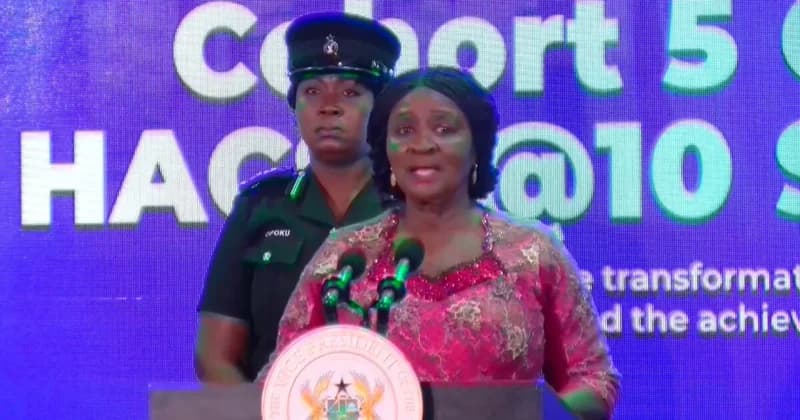
Vice President Professor Jane Naana Opoku-Agyemang has reaffirmed the government's commitment to bridging the digital gender gap during the graduation of 80 young women from the Heritage and Cultural Society of Africa (HACSA) Foundation’s Tech4Girls programme. The ceremony, held in Accra, marked the completion of a rigorous two-month training cohort designed to equip participants with essential tools for the 21st-century economy. Addressing the graduates, the Vice President emphasized that ensuring girls have an equal place in Ghana’s digital future is not just a matter of equity, but a necessity for national progress and economic resilience.
The fifth cohort of the Tech4Girls programme provided intensive training in software coding, artificial intelligence (AI), web development, and cybersecurity. Beyond technical proficiency, the curriculum integrated leadership and entrepreneurship to foster a holistic approach to problem-solving. Graduate Judith Agudey shared her transformative journey, noting how the programme helped her challenge deep-seated gender norms in the technology sector and build a professional network. HACSA leadership stated that the initiative aims for a 70% transition rate for its graduates into higher education, entrepreneurship, or formal employment within six months of completion.
Highlighting broader national efforts, Vice President Opoku-Agyemang announced a strategic partnership with Huawei Technologies to train 3,000 girls in Artificial Intelligence through the "Girls in ICT" initiative. This move is part of a larger government strategy to integrate digital skills training into basic schools and tertiary institutions. She also referenced the "One Million Coders Programme," which includes a dedicated 50,000 slots for Persons with Disabilities (PWDs), ensuring that the digital revolution remains inclusive of all segments of Ghanaian society.
Former Ghanaian Ambassador to France, Johanna Svanikier, underscored the economic imperative of investing in women, stating that female empowerment is a primary driver of sustainable growth. The graduation coincided with the 10th anniversary of the HACSA Foundation and serves as a milestone leading up to the upcoming HACSA Sankofa Summit scheduled for December 2026. As Ghana continues its digital transformation, these initiatives represent a concerted effort between the state and civil society to build a skilled workforce capable of addressing community challenges through technological innovation.

