••
Vice-President Opoku-Agyemang and Industry Leaders Champion Sustainable Growth and Indigenous Investment
•3 min read•14 sources
Vice-President Professor Naana Jane Opoku-Agyemang has called for a strategic shift toward a sustainable green economy to unlock Ghana’s horticultural and industrial potential. Speaking at the opening of the 14th Ghana Garden and Flower Show in Accra, themed "Green Means Business, Beauty and More," the Vice-President emphasized that the horticultural sector is a viable engine for job creation and international trade. This sentiment was echoed by Jorgen Bollesen, Head of Economic Diplomacy and Trade at the Danish Embassy, who urged a deeper green industrial partnership between Denmark and Ghana. Bollesen highlighted that adopting Environmental, Social, and Governance (ESG) practices and industrial decarbonization are no longer optional but essential for Ghanaian businesses seeking to access premium global markets and navigate stringent European regulations.
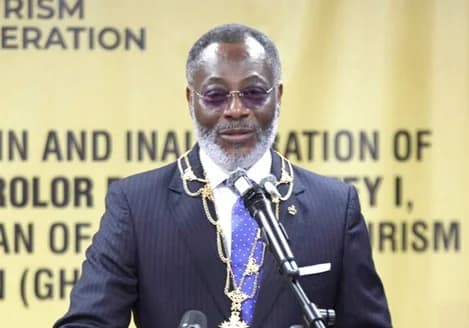
Parallel to the green transition, there is a growing movement to empower indigenous enterprises and redirect the narrative surrounding local wealth creation. Alex Apau Dadey, Executive Chairman of the KGL Group, challenged the media to move away from a culture of suspicion toward local business "champions" and instead foster a partnership that drives industrialization. Similarly, Drolor Bosso Adamtey I, the newly appointed Board Chairman of the Ghana Tourism Federation (GHATOF), urged Ghanaians to take the lead in tourism investment. He argued that the nation must stop waiting for foreign investors and instead prioritize domestic ownership, improved West African air connectivity, and innovative policies such as citizenship-by-investment to catalyze economic development.
While leadership focuses on long-term growth, several local businesses are grappling with significant setbacks that underscore the need for robust support systems. In Obuasi, roughly 300 traders affected by a devastating fire at the Town Hall received a GH₵1.5 million support package from Bawa-Rock Limited, which included sewing machines and financial aid aimed at business recovery. Conversely, at Laboma Beach, entrepreneur and musician Itz Tiffany has made a public appeal for government compensation following the demolition of her "Box Bar" and several other establishments. She noted that many business owners are now facing crippling debt after their investments, which were often funded through high-interest loans, were razed during the recent exercise.
To bridge these gaps, government agencies and private stakeholders are intensifying grassroots engagement. The National Entrepreneurship and Innovation Programme (NEIP) recently highlighted the success of its "Adwumawura" initiative, with Deputy CEO Joan Ahiawordor praising its impact on women and encouraging traditional leaders to mobilize local participation. As Ghana navigates this complex economic landscape, the consensus among stakeholders remains clear: the path to resilient growth lies in a combination of sustainable green practices, a supportive environment for indigenous "champions," and the protection of local investments against unforeseen disasters and administrative actions.

