••
Ghana’s Political Landscape: NPP Unveils Policy Framework Amid Internal Contests and Ellembelle Vandalism
•3 min read•25 sources
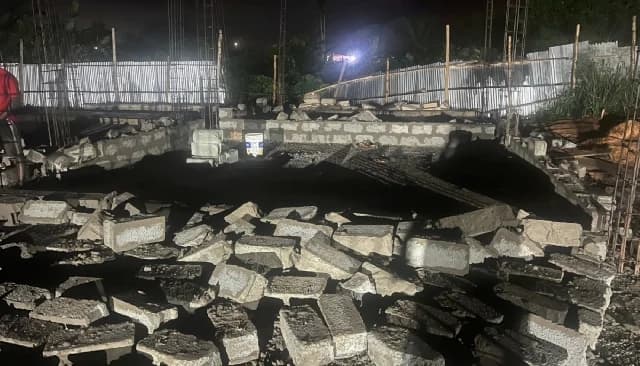
The New Patriotic Party (NPP) has launched a significant research-driven policy infrastructure, comprising over 23 sector committees under the leadership of Dr. Mahamudu Bawumia. This framework, overseen by a dedicated Policy Coordination Office, aims to reposition the party as a "government-in-waiting" by developing credible alternatives in areas such as job creation, healthcare accessibility, and energy security. Portrayed as a significant shift in opposition dynamics, the initiative focuses on research-backed policy papers intended to provide a fully developed program for future elections. Analysts suggest this "Bawumia Model" could redefine political accountability in Ghana by demanding constructive proposals rather than mere criticism, potentially enhancing the quality of national governance. Internal NPP dynamics are concurrently intensifying as several high-profile figures advance their leadership bids. Boakye Kyeremateng Agyarko recently completed the first phase of his campaign for National Chairman, emphasizing party unification and member welfare across the Ahafo and Ashanti regions. In the race for National Vice Chairman, Dr. Mustapha Abdul-Hamid has condemned anonymous attacks against his candidacy as "cowardly," asserting his longstanding commitment to the party. Meanwhile, Odeneho Kwaku Appiah expressed confidence in his bid for the Ashanti Regional Chairmanship, and Kofi Ofosu Nkansah has called for reforms in polling station elections to ensure transparency and prevent manipulation by incumbent executives and MPs. The political climate is further complicated by localized violence and land disputes, most notably in the Ellembelle District. Five individuals have been remanded following the destruction of a GH¢1 million National Democratic Congress (NDC) office complex by armed men. The demolition is linked to a dispute with the Awiaso royal family regarding land purchased by the local MP in 2017. District Chief Executive Joseph Armah Agyekum condemned the act as unlawful, reiterating that only court-authorized actions are permissible. Security concerns also surfaced at the Central Tongu District Assembly following a knife-wielding threat against the DCE’s aide, prompting calls for heightened vigilance at administrative centers. Regional traditional leaders are actively engaging in conflict resolution to maintain stability. The Oti Regional House of Chiefs has initiated a mediation process involving the Akyode, Challa, and Adele ethnic groups to restore peace in Nkwanta. Similarly, the Eastern Regional House of Chiefs rejected an attempt to remove the Paramount Chief of Yilo Krobo, upholding the Chieftaincy Act and affirming Oklepeme Nuer Anorbaa Sasraku II’s legitimate position. In Sunyani, a new Customary Lands Secretariat Committee has been inaugurated to stem multiple land sales and litigation, highlighting the critical role of traditional governance. In a display of collaborative leadership, Julius Debrah, former Chief of Staff, was recently commended for his humility and commitment to grassroots development during traditional ceremonies in Agona Kwanyako. Finally, persistent calls for transparency continue to shape the political discourse. Samuel Koku Anyidoho, former communications head under the late President John Evans Atta Mills, recently revealed he has never seen the former president's autopsy report nearly 14 years after his passing. This revelation, alongside family petitions for the report's release, underscores ongoing concerns regarding historical accountability. In a separate push for institutional integrity, the Ghana Police Administration has refuted allegations of bribery and paper leakage in recent promotion exams, insisting the process conducted with the University of Cape Coast was transparent. Together, these developments reflect a nation balancing forward-looking policy innovation with the complexities of internal party democracy and the resolution of historical grievances.
This story touches markets covered on Anansi Intelligence ↗.
Related topic
NDC (National Democratic Congress): Latest News →More from politics
Continue exploring similar stories


