••
Norbert Wiener’s Cybernetic Legacy: Re-evaluating the Ethical Foundations of Modern Artificial Intelligence
•2 min read•1 source
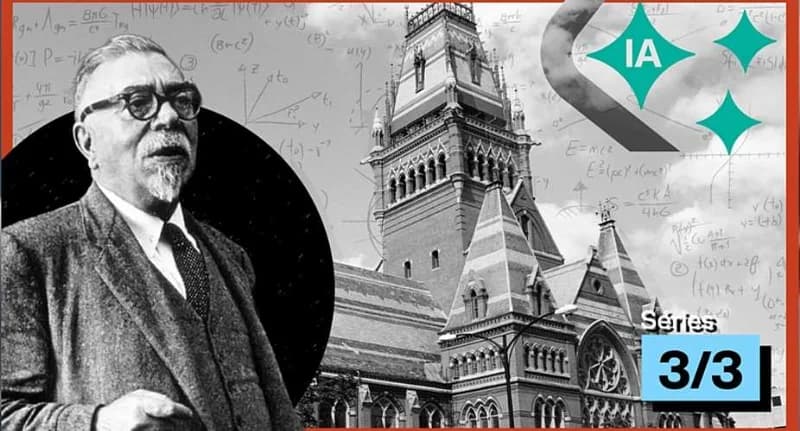
Norbert Wiener, the American mathematician born in 1894, is increasingly being recognized as a pivotal figure whose work provided the conceptual architecture for what we today call Artificial Intelligence (AI). While names like Alan Turing and John von Neumann frequently dominate historical accounts of computing, Wiener’s pioneering of 'cybernetics'—the science of control and communication in systems—offered a framework for machine learning long before the digital age reached its current maturity. His legacy serves as a reminder that the roots of AI are deeply intertwined with the study of how information is processed by both biological and mechanical entities. During and following the Second World War, Wiener’s mathematical breakthroughs laid the groundwork for complex technologies ranging from automated anti-aircraft systems to early computer prototypes. Unlike some of his contemporaries who focused purely on the logic and architecture of the machine, Wiener was fascinated by the feedback loops that allow systems to self-correct and learn from their environment. This focus on adaptive behavior is now a cornerstone of modern neural networks and robotics, making his research more relevant today than perhaps at any other point in history as engineers seek to create more autonomous systems. Beyond the technical specifications, Wiener was a visionary who predicted the profound societal disruptions that would follow the rise of automation. He was among the first to sound the alarm on the ethical dilemmas posed by intelligent machines, urging scientists and policymakers to consider the human cost of a robot-led workforce. His advocacy for a human-centered approach to technology emphasized that progress should not come at the expense of social equity or human dignity. This foresight is particularly resonant in the current global climate, where nations are grappling with the rapid integration of generative AI and its impact on the job market. As the world enters a new era of technological transformation, the re-examination of Wiener's contributions offers a vital roadmap for ethical development. His work suggests that the challenge of AI is not merely a technical one, but a moral imperative to ensure that systems remain under human control and serve the collective good. By revisiting the cybernetic principles established decades ago, modern developers and ethicists can better navigate the complex intersection of automation, robotics, and the preservation of human values in an increasingly digitized society.