••
JICA and Noguchi Institute Empower African Lab Professionals with Advanced Infectious Disease Training
•2 min read•4 sources
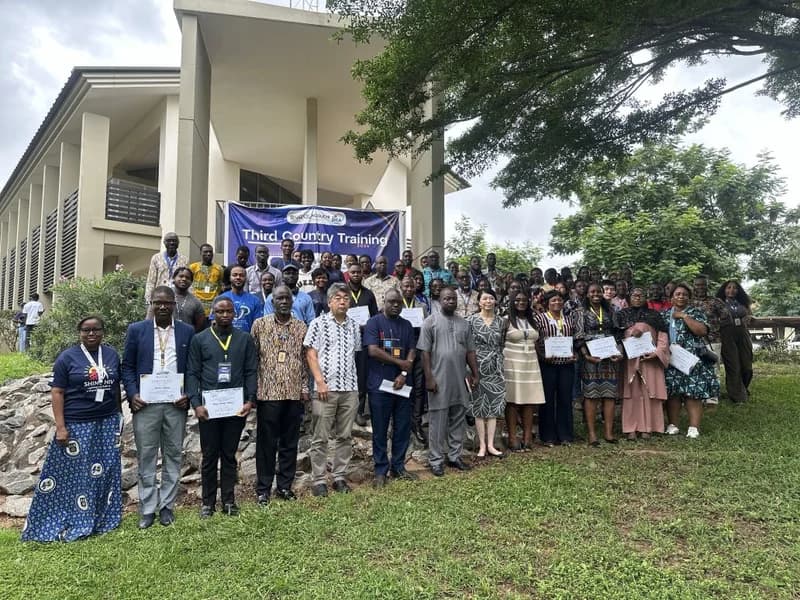
Eight laboratory professionals from six African countries—Ghana, Liberia, Nigeria, Sierra Leone, Togo, and Zambia—have successfully completed a specialized eight-week training course aimed at bolstering the continent's defense against infectious diseases. The program, hosted at the prestigious Noguchi Memorial Institute for Medical Research (NMIMR) in Legon, was organized in collaboration with the Japan International Cooperation Agency (JICA). This initiative underscores a growing commitment to strengthening regional healthcare infrastructure and diagnostic capabilities in the face of evolving global health threats. By centralizing this training in Ghana, NMIMR continues to cement its role as a hub for medical excellence and a critical asset in the African Union's broader health strategy.
The intensive curriculum was designed to bridge theoretical knowledge with practical expertise, covering three critical pillars of medical science: Parasitology, Virology, and Bacteriology. To ensure comprehensive learning, the training was structured in two distinct phases: an online session spanning from April 20 to May 15, 2023, followed by a rigorous in-person practical segment conducted at the NMIMR facilities from June 1 to June 26, 2023. These modules are particularly relevant in the current global health climate, where rapid identification of pathogens is essential for preventing localized outbreaks from escalating into pandemics. By focusing on these core areas, the course equipped participants with the necessary tools to enhance disease surveillance, improve laboratory protocols, and increase the accuracy of diagnostics within their respective national health systems.
This latest cohort joins a growing network of skilled experts, bringing the total number of professionals trained under this partnership to 80 since the program's inception. This milestone reflects the enduring effectiveness of the partnership between JICA and NMIMR in advancing global health through structured international cooperation and resource sharing. As these eight professionals return to their home countries, they are expected to play a pivotal role in researching and treating infectious diseases, thereby contributing to a more resilient and self-sufficient health framework across the African sub-region. The ongoing success of this program suggests a sustainable model for international cooperation in the medical field, ensuring that African scientists remain at the forefront of the fight against infectious diseases.
This story touches markets covered on Anansi Intelligence ↗.
More from health
Continue exploring similar stories


