••
NOAA Confirms Onset of El Niño Conditions with Warning of Potential Record Global Temperatures
•2 min read•5 sources
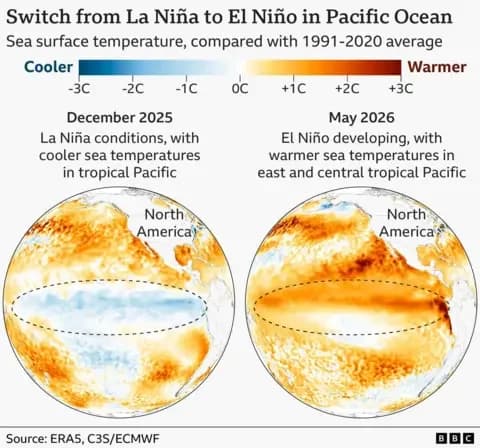
The U.S. National Oceanic and Atmospheric Administration (NOAA) has officially declared the onset of El Niño conditions in the tropical Pacific, following a significant and sustained rise in sea surface temperatures. This announcement marks the end of the cooler La Niña phase and the beginning of a phenomenon that typically occurs every two to seven years. According to NOAA, sea surface temperatures have already surpassed the critical 0.5°C threshold above average, signaling a shift in atmospheric winds that will likely disrupt global weather patterns and economies for the next year or longer.
Meteorologists are particularly concerned that this specific event could evolve into a “super” El Niño, potentially ranking among the strongest on record. Current computer models suggest a 63% chance of a very strong phenomenon developing by winter, with temperatures in the tropical Pacific possibly exceeding 1.5°C or even 3°C above historical averages. Scientists, including Professor Adam Scaife from the UK Met Office, warn that the effects of this El Niño will be compounded by existing global warming trends. This synergy could push global temperatures to unprecedented levels, with some forecasts predicting that 2027 could become the hottest year ever recorded.
The environmental and humanitarian implications are significant, especially for vulnerable regions in the tropics. A strong El Niño typically triggers extreme weather events, including severe droughts in some areas and heavy flooding in others. Regions such as East Africa and Central America are at high risk of agricultural disruptions, which could exacerbate existing food insecurity and economic instability. While the Japan Meteorological Agency has supported NOAA’s assessment, Australia’s Bureau of Meteorology remains more cautious, highlighting the complex nature of forecasting these global climate shifts.
As the world prepares for these shifts, the declaration serves as a critical warning for governments and international agencies to bolster disaster preparedness and food supply chains. The phenomenon is expected to influence weather patterns well into 2024, with its thermal legacy potentially lingering for years. Monitoring remains essential, as the interaction between natural climate variability like El Niño and human-induced climate change creates a volatile environment that threatens to push the planet’s climate into uncharted territory.