Ghana News AI
HomeBriefsAsk GhanaTopicsTools
•
•

Stay Informed

Get AI-curated news briefs from Ghana delivered to your inbox every morning. Free forever, no spam.

Explore

  • Home
  • Briefs
  • About

Categories

  • Politics
  • Business
  • Sports
  • Entertainment
  • Africa

Features

  • Analysis
  • Cedi Rates
  • Dollar to Cedi
  • Ghana Gold Price
  • BoG Policy Rate

Topics

  • Armed Forces Recruitment
  • WAEC Results & News
  • Nana Ama McBrown
  • NDC News
  • All Topics

Legal

  • Privacy Policy
  • Terms of Service
Ghana News AI© 2026. All rights reserved.
Made withfor Ghana
business

NIB Commits GH¢1 Million to Ghana Armed Forces Housing Initiative and Plans New Burma Camp Branch

23rd February•2 min read•3 sources
NIB Commits GH¢1 Million to Ghana Armed Forces Housing Initiative and Plans New Burma Camp Branch
  1. Home
  2. /Business
  3. /NIB Commits GH¢1 Million to Ghana Armed Forces Housing Initiative and Plans New Burma Camp Branch

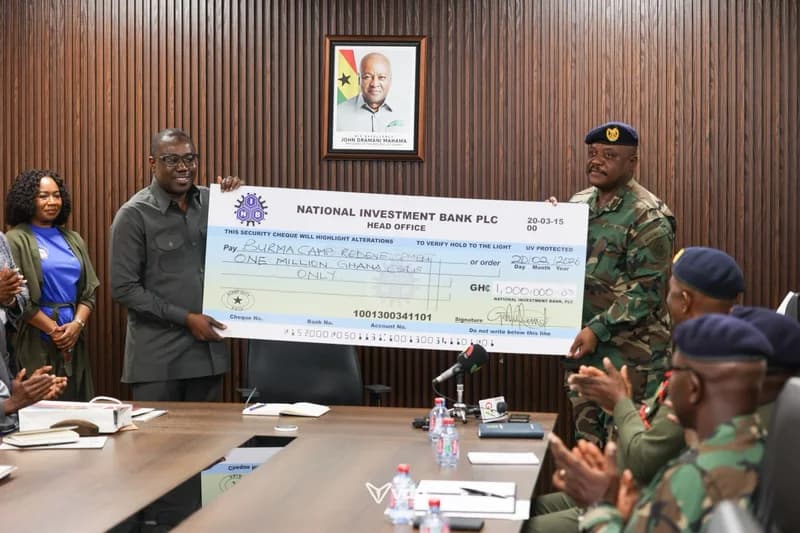
The National Investment Bank (NIB) PLC has announced a GH¢1 million commitment to support a housing redevelopment project for the Ghana Armed Forces (GAF) at Burma Camp. This contribution, designated as seed funding, marks a significant milestone in the long-standing institutional relationship between the state-owned bank and the military. The initiative is part of a broader strategic effort to address the accommodation challenges facing service members while deepening the financial ties between the two institutions. Managing Director of NIB, Chief Dr. Doliwura Zakaria, emphasized during a recent ceremony that this partnership is central to the bank's mission. Beyond the financial donation, NIB has revealed plans to establish a dedicated branch within Burma Camp to improve banking access and financial inclusion for military personnel. This move is expected to streamline financial services for the GAF community, providing them with tailored banking solutions directly on-site. Dr. Zakaria also noted that NIB is currently undergoing significant reforms under government guidance, including initiatives to strengthen its capital base through the floating of shares and other financial restructuring measures. Chief of Defence Staff, William Agyapong, expressed deep gratitude for the bank's support, highlighting that housing remains a critical priority for the military command. The redevelopment at Burma Camp is a component of an ambitious national goal to construct 10,000 housing units for security personnel across the country. Specifically, the Burma Camp phase aims to deliver 250 units to help alleviate the current housing deficit. The CDS encouraged other corporate entities to follow NIB's lead in supporting national security infrastructure. A formal launch and fundraising event for the housing project is scheduled for April 18, 2026, which will serve as a platform to attract further investment and institutional support. The collaboration between NIB and the Ghana Armed Forces reflects a growing trend of public-sector institutions partnering to address infrastructure gaps. As NIB continues its reform process to ensure long-term sustainability, its involvement in high-impact social projects like the Burma Camp housing scheme reinforces its role as a key player in Ghana’s national development agenda.

Our Take

From the Team

Coming Soon

Our team will add key insights, trends, and actionable takeaways to help you stay informed faster.

This story touches markets covered on Anansi Intelligence ↗.

Related topic

Ghana Armed Forces Recruitment: Latest News & Updates →

More from business

Continue exploring similar stories

Paramount Chief Awulae Kwasi Amakyi III Pledges to Revitalize Jomoro Coconut Industry as Alternative to Galamsey
business|Yesterday

Paramount Chief Awulae Kwasi Amakyi III Pledges to Revitalize Jomoro Coconut Industry as Alternative to Galamsey

Awulae Kwasi Amakyi III, the Paramount Chief of the Western Nzema Traditional Area, has called for a strategic focus on the revitalization of the coconut industry as a sustainable alternative to illegal mining, known locally as galamsey. Speaking at the Jomoro Development Conference held in Half-Assini, the Paramount Chief emphasized that the region’s future prosperity lies in harnessing its agricultural heritage rather than the destructive path of unregulated mining. The conference, which also marked his first anniversary in office, served as a platform to discuss the historical significance of the Nzema people and the roadmap for regional economic development. Historically, the coconut sector has been the backbone of the Jomoro economy, providing the financial means for local families to support their livelihoods and educate their children. Awulae Amakyi III argued that the current economic climate necessitates a shift back to these roots, but with a modern focus on the entire value chain. He specifically called for the establishment of processing factories within the district to ensure that the region benefits from value addition, rather than merely exporting raw nuts. This industrialization drive is seen as a key strategy to create stable jobs for the youth and discourage the encroachment of illegal mining activities that threaten the local environment and water bodies. Beyond agriculture, the conference also addressed the integration of local resources into larger national initiatives, such as the Petroleum Hub Development Project. Stephen Blay, the convener of the conference, highlighted that for these major developmental projects to succeed, there must be a concerted effort to harness local resources effectively. He stressed the importance of fair compensation for farmers whose lands and livelihoods are affected by such large-scale infrastructure projects. This balanced approach aims to ensure that industrial progress does not come at the expense of the traditional agricultural sectors that have sustained the community for generations. The commitment to reviving the coconut industry reflects a growing trend among traditional leaders in Ghana to seek environmentally sustainable development paths. By prioritizing the "green gold" of the coconut palm over the immediate but fleeting gains of galamsey, the Western Nzema Traditional Area is positioning itself as a model for resource management. As the government under President John Mahama continues to navigate national economic and environmental challenges, local initiatives like the Jomoro coconut revival provide a critical blueprint for grassroots industrialization and community-led environmental stewardship.

Gospel star Diana Hamilton joins Onga family as brand ambassador
business|Yesterday

Promasidor Ghana Names Gospel Icon Diana Hamilton as Brand Ambassador for Onga Tomato Mix

Promasidor Ghana has officially announced the appointment of multiple award-winning gospel musician Diana Antwi Hamilton as the brand ambassador for Onga Tomato Mix. This strategic partnership aims to leverage the singer's massive public appeal and wholesome reputation to reinforce Onga's position as a household staple in Ghanaian kitchens. The announcement marks a significant marketing move for Promasidor, seeking to connect more deeply with domestic consumers through one of the country's most respected and influential cultural figures. During the unveiling, Abiodun Ayodeji, the Commercial Director for Promasidor Ghana, emphasized that the selection of Diana Hamilton was rooted in shared values. He highlighted the musician's warmth, commitment to family, and her ability to successfully balance a demanding career with home life as qualities that mirror the core mission of the Onga brand. Beyond its culinary appeal, Onga Tomato Mix is positioned as a health-conscious option for families, as the product is enriched with essential nutrients including fiber, Vitamin A, Vitamin D, and Zinc, designed to provide a nutritious base for various local dishes. In her response to the appointment, Diana Hamilton expressed profound enthusiasm about joining the "Onga family" and representing a brand that many Ghanaians trust. Known for her significant influence within both religious and secular circles, she encouraged consumers to embrace the product line, noting its high quality and nutritional benefits. This endorsement is expected to drive brand loyalty and increase market share in the highly competitive seasoning and tomato paste sector, where cultural resonance and celebrity trust often dictate consumer behavior. The collaboration between Promasidor and Hamilton represents a broader trend in the Ghanaian business landscape where corporate entities align with high-profile personalities to drive product visibility and consumer engagement. As the brand prepares to roll out new marketing campaigns featuring the gospel star, the focus will likely remain on the intersection of nutrition, tradition, and the modern Ghanaian lifestyle. This partnership not only boosts Onga's brand equity but also cements Diana Hamilton's status as a versatile public figure with substantial commercial influence across the country.

Ghana’s Automotive Sector Evolves with New Import Rules, Winneba Interchange Progress, and Electric Vehicle Adoption
business|Yesterday

Ghana’s Automotive Sector Evolves with New Import Rules, Winneba Interchange Progress, and Electric Vehicle Adoption

Ghana’s automotive and transport landscape is undergoing a significant transformation as the government and private sector move to modernize infrastructure, tighten import standards, and promote sustainable mobility. Central to these changes is the Ghana Standards Authority’s (GSA) announcement of stricter regulations for used car imports, set to take effect on October 1, 2026. While the GSA clarified that this is not a total ban on used vehicles, the new enforcement measures are designed to ensure that all imported vehicles meet rigorous safety and technical benchmarks, protecting consumers and improving road safety across the nation. Simultaneously, the government’s "Big Push" Infrastructure Programme is making strides with the construction of the Winneba Junction Interchange. Although the project aims to drastically improve traffic flow and transit efficiency in the Central Region, the current construction phase has posed challenges for commuters and local enterprises. Motorists on the Winneba-Accra Highway report significant delays, dusty conditions, and increased vehicle maintenance costs due to rough surfaces. Local businesses have noted a decline in customer traffic, though many residents remain optimistic that the completed interchange will eventually alleviate the long-standing congestion issues on this vital corridor. Complementing these regulatory and infrastructure developments is a growing shift toward green technology, as highlighted during the recent Absa Auto Fair at Ghud Park. The event showcased the latest in electric mobility, featuring models such as the Toyota bZ3X and bZ5 presented by EV Afriq and Electric Miles Africa. Major automotive distributors including Japan Motors and MAC Ghana participated, offering consumers various financing options and test drives. This focus on electric vehicles (EVs) aligns with global trends and suggests a pivot in the Ghanaian market toward more sustainable transportation solutions. Together, these developments reflect a multi-faceted approach to improving Ghana's business and transport sectors. From the GSA’s focus on vehicle quality to the investment in large-scale interchanges and the promotion of EV technology, the country is positioning itself for a more efficient and modern future. As the October 2026 deadline for new import rules approaches, stakeholders in the automotive industry and the general public are expected to adapt to these higher standards, supported by improved road networks and emerging financial products that make modern vehicle ownership more accessible.

 Ndiyakupi Nghituwamata (left), the Namibian High Commissioner, and James Gunu, Volta Regional Minister
business|Yesterday

Ghana Drives Economic Transformation Through Volta Region Investment and China’s Zero-Tariff Trade Access

Ghana is intensifying its efforts to attract high-value, productive investments and expand its international trade footprint, highlighted by significant diplomatic engagements in the Volta Region and a landmark trade agreement with China. This strategic shift aligns with a recent mandate from the Ghana Free Zones Authority (GFZA) for the nation to move beyond merely attracting capital toward securing investments that foster local industrialization, job quality, and technology transfer. At the launch of the 2025 Annual Investment Report, GFZA Deputy CEO Latif Abdul Oduro emphasized that national strategies must prioritize sectors such as agro-processing, pharmaceuticals, and ICT to ensure Ghanaian enterprises can compete internationally on both quality and cost. The Volta Region has emerged as a central focal point for these economic explorations, attracting both diplomatic and private sector interest. Ndiyakupi Nghituwamata, the High Commissioner of Namibia, recently initiated a five-day economic familiarization tour of the region to explore trade and investment opportunities in tourism and agriculture. This visit, supported by Regional Minister James Gunu, aims to deepen the historical ties between the two nations through practical economic cooperation. Simultaneously, Dr. Gabriel Tanko Kwamigah-Atokple, the Volta Regional Representative on the Council of State, has been engaging with American investor John P. Rochon. Their discussions have centered on lithium exploration and local resource development, highlighting the region’s potential for sustainable industries due to its strategic proximity to Togo and the absence of illegal mining. On the international trade front, Ghana is poised for a significant export boost following China’s decision to grant zero-tariff treatment to Ghanaian products. Effective May 1, 2026, this policy will allow key commodities—including cocoa, cashew kernels, and textiles—to enter the Chinese market at significantly lower costs. While the policy represents a major opportunity for the Ghanaian economy, stakeholders and the Chinese Ambassador to Ghana have cautioned that tariff-free access must be met with improved production capacity. They stressed that local exporters must enhance their market knowledge and output consistency to fully capitalize on this preferential access to one of the world's largest consumer bases. These converging developments signal a comprehensive approach to economic growth under the current administration of President John Mahama. By linking regional resource potential with international trade incentives and a focus on productive industrialization, Ghana aims to translate investment data into tangible social outcomes. The ultimate goal, as outlined by the GFZA and regional leaders, is to create a robust economic framework where foreign partnerships directly empower local businesses, foster skills development, and drive the nation’s export-led recovery.

All
africa
business
education
entertainment
health
news
politics
sports
technology