••
Strategic Reshuffles and Economic Defenses: NDC Navigates Internal Transitions and National Policy
•3 min read•15 sources
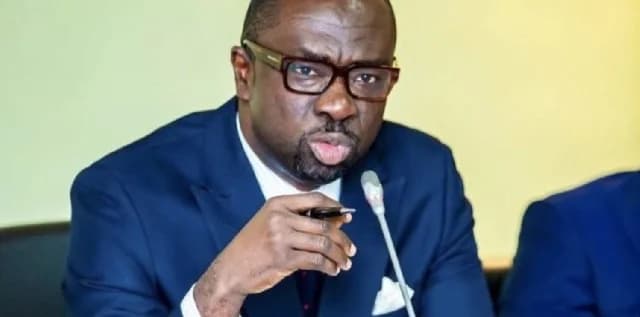
The National Democratic Congress (NDC) is undergoing a significant strategic transformation as it prepares for upcoming elections, marked by high-profile leadership changes in Parliament and intensive grassroots mobilization. NDC National Chairman Johnson Asiedu Nketia has defended the decision to replace Haruna Iddrisu and Mubarak Mohammed Muntaka with Dr. Cassiel Ato Forson as Minority Leader, describing it as a calculated move to prioritize economic issues on the national stage. While party leadership emphasizes unity and the evolving political landscape, Mussa Dankwa of Global Info Analytics has warned that these changes could stoke internal tensions, particularly in the Northern Region, if the rationale behind them is perceived as overly political or personal. At the same time, the party is strengthening its base through initiatives like the one launched by NDC-aligned teachers in the Western North Region, aimed at enhancing voter awareness and simplifying complex policy programs for local communities.
Amidst these internal shifts, President John Dramani Mahama and his defenders are actively pushing back against allegations of impropriety and economic mismanagement. Member of Parliament Felix Kwakye Ofosu recently clarified that the President recused himself from Cabinet discussions regarding the Damang Mine lease to Engineers & Planners to avoid any conflict of interest involving his brother. On the economic front, President Mahama has highlighted his administration's role in stabilizing a struggling IMF program, noting that while key performance indicators were initially off-track, rigorous intervention led to successful reviews and the release of critical funding. Significantly, Mahama stated that his government would eschew celebratory events—referred to as 'kenkey and waakye parties'—upon the completion of the IMF program, emphasizing that the work of economic strengthening remains an ongoing and serious commitment.
Outside the immediate political arena, the Ghanaian legal and diplomatic systems are addressing issues of security and public accountability. The Attorney General’s office has recently submitted detailed listings of landed properties belonging to Kwabena Adu-Boahene, the former Director-General of the National Signals Bureau, as part of an ongoing GH""48 million trial. Concurrently, the legal system is handling the case of TikToker Akosua Serwaa Minat, who was granted a GH""1 million bail following charges of issuing death threats against President Mahama. The defense has criticized these bail conditions as excessive, reflecting the high stakes of political discourse in the digital age. Internationally, Ghana’s High Commissioner to South Africa, Benjamin Quarshie, has issued a stern warning against verbal attacks on Ghana’s leadership, stressing the need for diplomatic respect and the urgent repatriation of citizens affected by xenophobic violence.
Despite the prevailing partisan climate, there are rare instances of cross-party commendation that offer a glimpse into a more collaborative political future. Kwesi Pratt Jnr, Managing Editor of The Insight, notably praised NPP Member of Parliament Sammi Awuku for his ability to transcend partisan divisions in his service to the Akuapem North constituency. This mix of strategic maneuvering, robust defense of executive records, and judicial oversight underscores a complex political environment in Ghana, where parties are balancing internal discipline with the broader demands of national stability and international diplomacy.
This story touches markets covered on Anansi Intelligence ↗.
Related topic
NDC (National Democratic Congress): Latest News →More from politics
Continue exploring similar stories


