••
NCCE and UNFPA Launch Major Campaign in Anloga District to Combat Gender-Based Violence and Improve Adolescent Health
•2 min read•4 sources
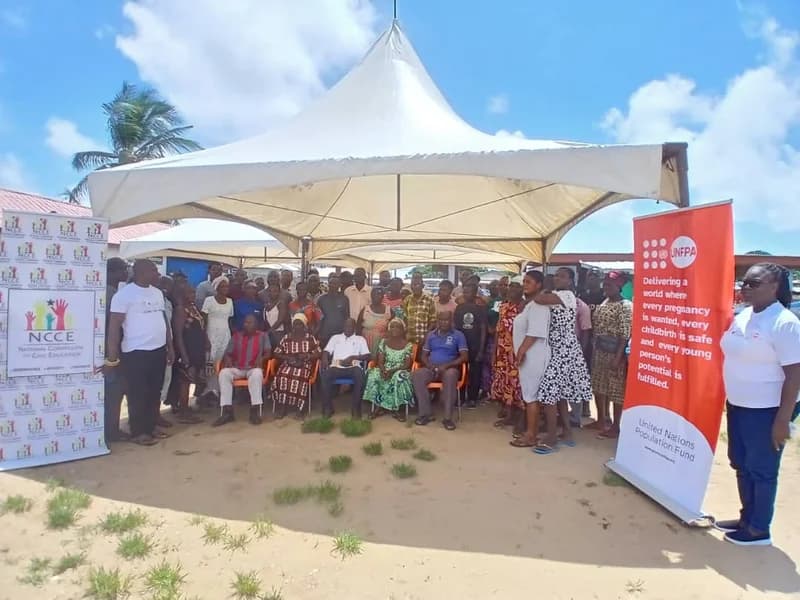
The National Commission for Civic Education (NCCE), in partnership with the United Nations Population Fund (UNFPA), has officially launched a comprehensive civic engagement campaign in the Anloga District. Titled “Empowering Community and Youth for Adolescent Health, Gender Equality, and Preventing Gender-Based Violence through Civic Engagement,” the initiative is specifically designed to address the systemic challenges facing adolescent girls. Funded by Global Affairs Canada under the Adolescent Girls Programme, this project seeks to dismantle barriers related to sexual and reproductive health rights (SRHR) and create a safer social environment for the youth in the region.
The campaign utilizes a multi-faceted approach to reach various segments of the community. Core activities include organized meetings with community stakeholders, targeted engagements with “Men and Boys Clubs,” and extensive outreach at high-traffic areas such as local markets and lorry stations. Additionally, mobile van broadcasts will be deployed to disseminate information across the district. Togbui Hatsu III, the NCCE Director, emphasized that the inclusion of men and boys is critical to the program's success, as they are being encouraged to act as advocates for prevention and champions of positive social norms.
Beyond general awareness, the initiative focuses on the critical issues of adolescent pregnancy and gender-based violence (GBV), which continue to disproportionately affect young women in Ghana. Facilitators and public health officers involved in the launch urged community members to move beyond silence and report cases of domestic violence swiftly to the appropriate authorities. By fostering a culture of accountability and providing education on the harms of GBV, the program aims to establish a protective network that safeguards the rights and physical well-being of vulnerable individuals.
Looking ahead, the NCCE and its partners have established monitoring frameworks to ensure the initiative's accountability and to gather data for evidence-based future programming. The long-term objective for 2026 is to shift community attitudes and strengthen coordination among stakeholders to ensure that adolescent health and gender equality remain at the forefront of local development. This collaboration underscores a growing commitment to addressing health and safety through grassroots civic participation and international support.
This story touches markets covered on Anansi Intelligence ↗.
More from health
Continue exploring similar stories


