••
National Council for Curriculum and Assessment Mandates Approved Learning Materials Amidst Broader National Standardization Efforts
•3 min read•7 sources
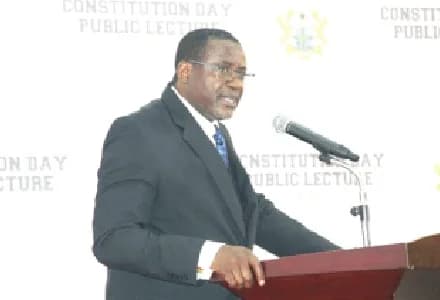
The National Council for Curriculum and Assessment (NaCCA) has issued a stern directive to all pre-tertiary schools and publishers in Ghana, mandating the exclusive use of approved learning materials in classrooms. Exercising its authority under the Education Regulatory Bodies Act, 2020 (Act 1023), NaCCA emphasized that all textbooks and educational resources must undergo a rigorous assessment and approval process. To facilitate easy verification for parents and educators, the Council has introduced an official QR code system that must be displayed on all authorized materials. NaCCA also raised alarms regarding the unauthorized use of its logo on unapproved resources, describing such practices as misleading and a threat to educational integrity, and has warned that violators will face legal action as the Council intensifies its enforcement activities. This educational crackdown coincides with a significant initiative by the Ghana Statistical Service (GSS) to standardize measurements in other key sectors of the economy. A landmark report released by the GSS and the Ministry of Food and Agriculture has introduced national conversion factors for non-standard units (NSUs) such as the 'olonka' and 'margarine tin'. According to Government Statistician Dr. Alhassan Iddrisu, these traditional measures have historically hindered the accuracy of food consumption data and agricultural statistics due to significant regional variations in weight. By establishing a national food measurement database and a digital repository, the GSS aims to enhance the reliability of GDP estimates and help policymakers better track food security and market trends. The drive toward institutional modernization is also gaining momentum within Ghana's legal and professional sectors. Professor Philip Ebow Bondzi-Simpson, Vice-Chancellor of Methodist University Ghana, has called on the Judiciary to embrace digital reforms and technology to enhance transparency and efficiency. Speaking at a lecture commemorating the Judiciary's 150th anniversary, he argued that modernizing courtrooms with digital recording facilities is essential for maintaining public confidence in the justice system. Simultaneously, the Institute of Public Relations (IPR) Ghana, led by President Esther A. N. Cobbah, has launched a month-long program throughout July 2026 focused on ethical communication and leadership readiness. Coinciding with World Public Relations Day on July 16, these activities underscore the critical role of strategic communication in national development. Collectively, these directives and reports signal a coordinated push toward greater accountability and standardization across Ghana's public institutions. Whether through the regulation of educational content, the modernization of judicial proceedings, or the standardization of economic metrics, the focus remains on building robust systems that support sustainable national growth. For the education sector specifically, the successful implementation of NaCCA’s directives promises a more structured and high-quality learning environment, ensuring that students are equipped with officially vetted tools for their academic development.
This story touches markets covered on Anansi Intelligence ↗.
More from education
Continue exploring similar stories


