••
Ministry of Food and Agriculture and ABC Oyasasee Ink Deal for 500,000-Metric Ton Fertilizer Plant to Bolster 'Feed Ghana' Agenda
•3 min read•9 sources
In a major move to solidify Ghana’s agricultural independence, the Ministry of Food and Agriculture (MOFA) has signed a Memorandum of Understanding (MOU) with ABC Oyasasee Yie Ltd to establish a massive organic fertilizer blending plant in the Eastern Region. The facility, which is expected to produce 500,000 metric tons of fertilizer annually, is a cornerstone of the government’s ‘Feed Ghana’ programme. Minister Samuel Opoku emphasized that the plant will prioritize organic solutions to enhance soil health and food security while creating jobs for agriculture graduates. By sourcing raw materials from the West African sub-region, the project aims to drastically reduce the nation’s reliance on imported fertilizers and strengthen the local industrial base.
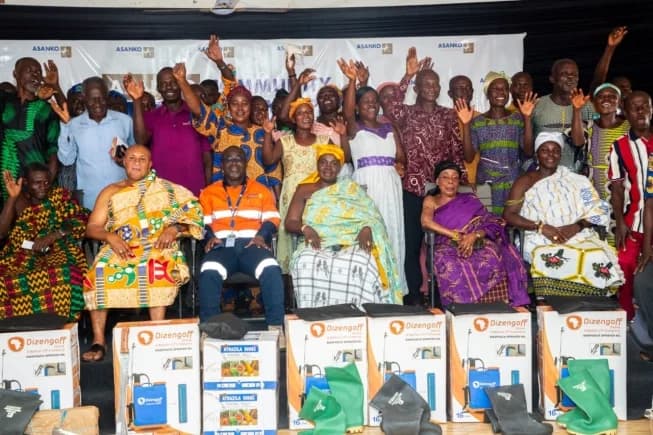
Supporting this industrial growth are significant improvements in agricultural infrastructure across the country. A recent monitoring and evaluation report by experts from the Korea International Cooperation Agency (KOICA) rated the performance of three key irrigation schemes—Aveyime, Dawhenya, and Ashaiman—at an ‘excellent’ 89.6%. The assessment highlighted exceptional scores for infrastructure and action plans, noting that innovations like the solar power system at Aveyime have helped mitigate high water-pumping costs. Complementing these state-led efforts, Asanko Gold Ghana Limited has launched the second phase of its Community Agricultural Support Programme, providing inputs and climate-resilient training to 80 smallholder farmers in the Amansie West and South districts to counteract the impact of illegal mining on local livelihoods.
Despite these gains, the tomato industry remains a critical area for development as the country seeks to close its production gap. While the Ghana Tomato Self-Sufficiency Initiative (GHATSI) is working to create a stable value chain, farmers such as Amidu Salifu Azeko report that inconsistent water access from the Vea Irrigation Dam and high post-harvest losses continue to hinder productivity. Experts suggest that integrating smart technology for disease detection and water management is essential to transform the potential of local farmers into consistent market supply, eventually ending the paradox of importing tomatoes despite having suitable land and committed growers.
On the international and maritime fronts, Ghanaian officials are aggressively seeking new markets and sustainable management of aquatic resources. A delegation of municipal and district chief executives, led by Pius Opoku of Tano North, recently engaged the Ghana High Commission in London and farmers in Northern Ireland to explore partnerships for post-harvest processing and packaging. Simultaneously, the Ministry of Fisheries and Aquaculture Development is collaborating with the Ghana Science Association to develop a sustainable ‘Blue Economy.’ Sector Minister Emelia Arthur announced that a draft Blue Economy Commission Bill is expected to reach Cabinet by October 2026, aiming to protect ocean resources from illegal mining and destructive fishing practices while securing food sources for the future.
Live rates
Ghana gold price →

