••
Minority Caucus Urges President Mahama to Repeal Speech-Related Laws Amid Rising Social Media Prosecutions
•3 min read•36 sources
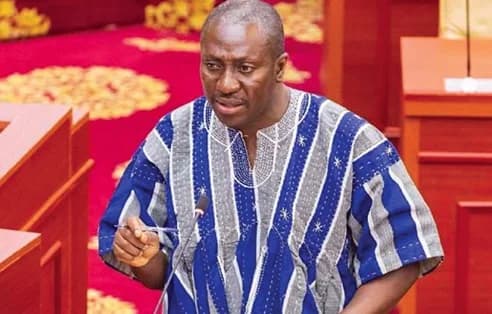
The Minority Caucus in Parliament, led by Minority Leader Alexander Afenyo-Markin, has intensified calls for President John Mahama to instruct the Attorney-General to repeal Sections 207 and 208 of the Criminal and Other Offences Act. The Caucus argues that these provisions are increasingly being used to criminalize free speech and suppress dissenting voices. This legislative push follows the controversial sentencing of TikToker Camila Alhassan, who was recently handed a one-year prison term for making derogatory remarks about President Mahama. Afenyo-Markin warned that maintaining these laws threatens the progress made since the 2001 repeal of criminal libel laws and poses a danger to all citizens, regardless of their political affiliation.
The crackdown on social media content has seen further developments with the arrest of 49-year-old Rita Konadu, known as 'Mamaone,' by the Cyber Vetting and Enforcement Team (CVET). Konadu was charged with offensive conduct and making defamatory comments about President Mahama and First Lady Lordina Mahama. Though granted bail of GH"50,000 by the Accra High Court, her case has fueled a national debate over the boundaries of freedom of expression. Despite her legal troubles, Konadu remained defiant, declaring her unwavering loyalty to her political party and prompting further scrutiny of the use of state power to police online speech.
In a notable contrast of political posturing, former Vice President and current New Patriotic Party (NPP) flagbearer Dr. Mahamudu Bawumia has called for the termination of legal proceedings against an opposition activist. Prince Aboagye, an NDC Branch Organiser in Agona West, was recently granted bail of GH"200,000 after being charged with offensive conduct for allegedly defamatory TikTok posts targeting Dr. Bawumia. However, Bawumia publicly distanced himself from the prosecution, asserting that he did not authorize the case. He emphasized that offensive speech should be countered with reasoned discourse and truth rather than state-led legal action, urging the Ghana Police and the Attorney-General to allow Aboagye to return to his family.
Legal experts and political commentators have offered nuanced perspectives on the escalating situation. Victor Kwadjoga Adawudu, a member of the NDC legal team, criticized what he described as 'overzealous' police action, suggesting that many speech-related arrests are driven by law enforcement officers rather than direct government policy. While Adawudu cautioned against a hasty repeal of offensive conduct laws—arguing they still serve as a necessary deterrent in an era of abusive social media commentary—he acknowledged that both major political parties have historically weaponized these arrests to energize their respective bases. He noted that many such cases often stall in court after the suspects secure bail, questioning the overall effectiveness of these prosecutions.
As the debate continues, the Minority Caucus maintains that the current application of Sections 207 and 208 represents a systematic threat to Ghana's democratic fabric. They are demanding a formal commitment from the Mahama administration to protect citizens from criminal charges stemming from critical speech. The outcome of these high-profile cases and the government's response to the calls for legislative reform will likely set a significant precedent for the future of digital expression and political discourse in Ghana.
This story touches markets covered on Anansi Intelligence ↗.
Related topic
NDC (National Democratic Congress): Latest News →More from politics
Continue exploring similar stories


