••
Marian Ewurama Addy celebrated for pioneering STEM and NSMQ leadership
•2 min read•1 source
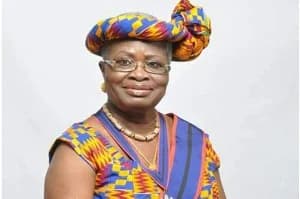
Ghana is paying tribute to the late Professor Marian Ewurama Addy, a trailblazing academic who broke significant barriers as the nation's first female professor in Science, Technology, Engineering, and Mathematics (STEM). Renowned for her intellectual rigor and dedication to education, Professor Addy remains a monumental figure in Ghanaian history, particularly for her transformative role in making science accessible and engaging for the youth. Her career was defined by a commitment to scientific research and the promotion of technical education, serving as a beacon for aspiring female scientists and educators across the country.
Beyond her academic research, Professor Addy was a fierce advocate for women’s participation in the sciences, working to dismantle the gender biases that historically hindered women from pursuing careers in analytical fields. Her work laid the critical foundation for the current emphasis on STEM education within Ghana’s national development agenda. She is credited with opening doors for many women in academia, proving that gender is not a barrier to achieving the highest levels of scientific excellence.
Perhaps her most visible contribution to public life was her tenure as the inaugural quiz mistress of the National Science and Maths Quiz (NSMQ). In this role, she gained widespread recognition and helped humanize the complex subjects of science and mathematics for a national audience. By leading the NSMQ with poise and authority, she transformed the competition into a national institution, fostering a culture of academic excellence and healthy competition among secondary schools. This role cemented her status as a premier science communicator, capable of bridging the gap between high-level research and public interest.
The enduring influence of Professor Addy is seen today in the increasing number of women entering STEM fields and the continued popularity of the NSMQ. Her life’s work continues to serve as a blueprint for how academic expertise can be leveraged for national progress and social change. As Ghana reflects on her contributions, her legacy stands as a testament to the power of education and the importance of representation in shaping the future of the nation’s scientific and technological landscape.
