••
President Mahama Champions Restitution of African Heritage and Human Remains at United Nations
•3 min read•11 sources
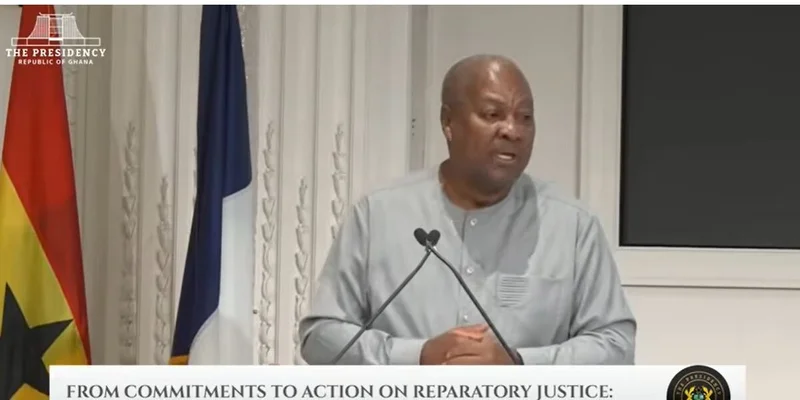
President John Dramani Mahama has delivered a forceful plea for the return of Africa’s cultural heritage and ancestral remains during a high-level side event at the United Nations General Assembly in New York. Addressing global leaders and international organizations, President Mahama framed the restitution of looted artifacts as a matter of fundamental justice and human dignity. He asserted that African heritage, much of which was taken during the colonial era, is essential for the continent’s identity and must be returned to its rightful communities as part of a broader reparatory justice agenda. The President was joined in this advocacy by Foreign Affairs Minister Samuel Okudzeto Ablakwa, who urged that the same restitution principles applied to Jewish artifacts in the United States be extended to African nations.
A central theme of the President’s address was the dehumanization inherent in the historical collection of African remains. Mahama emphasized that human remains held in global museums and private collections are not "collectibles" or "specimens" but are ancestors who deserve a dignified return. He cited the looting of the Asante Royal Palace and the specific case of King Badu Bonsu II as poignant examples of historical injustices that require correction. By returning sacred items, such as the Mpomponsuo sword, Mahama argued that the international community can help shift the narrative for young Africans from one of colonial subjugation and loss to one of creativity, civilization, and historical achievement.
Beyond the moral imperative, President Mahama called for tangible international support to build Africa’s cultural capacity. He urged multilateral development banks, international financial institutions, and private sector partners to invest in the continent’s cultural infrastructure. Specifically, he highlighted the need for funding regional archives, state-of-the-art conservation laboratories, digitization initiatives, and specialized training programs for African curators and historians. This infrastructure is deemed crucial for the professional management and preservation of artifacts as they are repatriated to the continent. Minister Ablakwa further supported this by noting that countries like France, Germany, and the Netherlands have already signaled a willingness to return items, provided international cooperation continues to improve.
In his closing remarks, President Mahama described the movement for restitution as a process of healing and partnership rather than one of blame. He noted that the recent UN Resolution 80/250, which recognizes the trafficking of enslaved Africans as a crime against humanity, provides a significant legal and moral framework for these efforts. By restoring these cultural connections, Ghana aims to ensure that future generations of Africans can directly engage with their history through tangible evidence of their ancestors' accomplishments. This campaign for reparatory justice seeks to build a future where Africa’s contributions to global civilization are fully recognized and celebrated in their original contexts.
Related topic
John Mahama: Latest News & Updates →
