••
President Mahama Secures $300m for School Infrastructure as "No Fees Stress" Policy Benefits 384,000 Students
•3 min read•5 sources
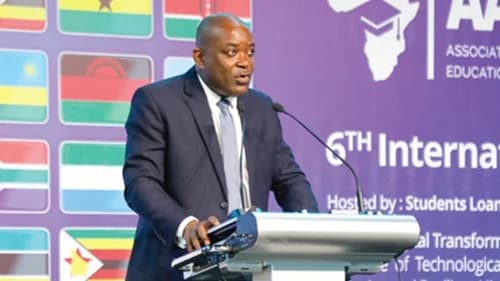
President John Dramani Mahama has announced a significant boost to Ghana’s education sector, securing a $300 million financing package from the World Bank. This funding is specifically designated to expand senior high school (SHS) infrastructure, with the primary objective of ending the double-track system by the close of 2027. This initiative forms a central pillar of the President’s "Reset Agenda," aiming to stabilize the Free SHS policy by addressing the overcrowding and logistical constraints that have historically challenged the system.
Parallel to senior high school reforms, the government is reporting substantial progress in tertiary education financing through its "No Fees Stress" policy. Professor Ahmed Jinapor, Director General of the Ghana Tertiary Education Commission (GTEC), recently highlighted that over 384,600 students have already benefited from the initiative. The policy comprises four strategic pillars: the "No-Academic-Fees" provision for first-year students, free tertiary education for persons with disabilities (PWDs), an enhanced "Students Loan Plus" facility, and a reformed traditional student loan scheme. This digitalized financing ecosystem is designed to ensure that no qualified Ghanaian student is turned away from higher education due to financial barriers.
Financial accessibility is being further bolstered by increased liquidity within the Students Loan Trust Fund (SLTF). CEO Dr. Saajida Shiraz announced that the fund disbursed approximately GH¢600 million this year, covering student loans and specialized education for PWDs. Looking ahead to the next academic year, the SLTF plans to increase funding to GH¢800 million, targeting approximately 200,000 beneficiaries. Dr. Shiraz noted that the transition to a fully digitalized loan system has been critical in facilitating faster access to funds, a move praised by GTEC for modernizing the nation's educational financing architecture.
Infrastructure development is also extending to the university level through strategic private-sector partnerships. The University of Cape Coast (UCC) has launched a $500 million student housing project in collaboration with GSC Property Investment Limited. Under a 30-year Build-Operate-Transfer (BOT) model, the initiative will construct 28 dormitory blocks providing 28,000 beds. Education Minister Haruna Iddrisu emphasized that this project requires no state funding or guarantees, serving as a blueprint for public universities to alleviate housing shortages through private-public partnerships while maintaining affordable charges for students.
These educational reforms are being linked directly to Ghana’s broader economic and industrialization goals. President Mahama emphasized that improving human capital through robust education is essential for the government’s commitment to enhancing agricultural production. By processing at least 50% of Ghana’s cocoa and other mineral resources domestically, the administration aims to create sustainable jobs for the youth. The synthesis of infrastructure expansion and innovative financing represents a comprehensive effort to align Ghana's educational output with its long-term development needs.
Related topic
John Mahama: Latest News & Updates →

