••
President Mahama Unveils GH"3 Billion Plan to Construct 30 New E-Blocks and End Double-Track System by 2027
•2 min read•8 sources
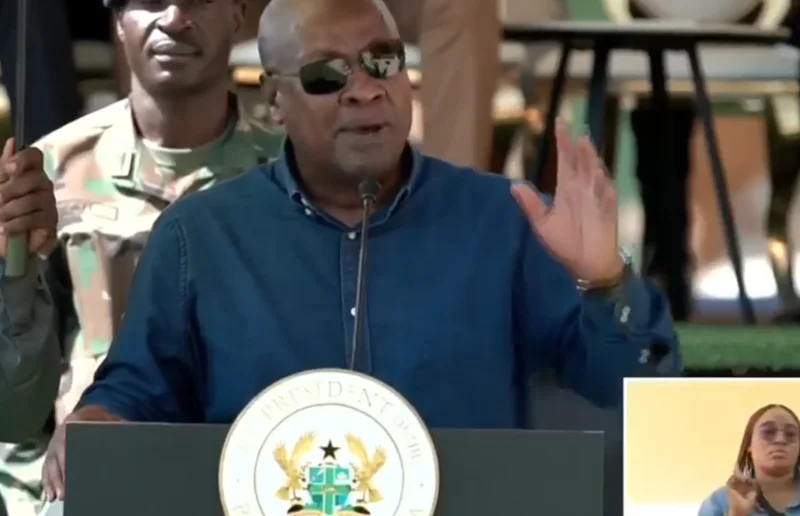
President John Dramani Mahama has announced a major GH"3 billion initiative to overhaul Ghana's secondary education infrastructure, aiming to eliminate the double-track system by 2027. Speaking during a tour of the Upper East Region on August 13, the President revealed plans to construct 30 new E-block community day schools under the STAR-G project (also referred to as the Star J Project). This infrastructure drive is complemented by a pledge to complete 30 additional abandoned E-block projects nationwide this year, ensuring that taxpayer investments from previous years are not wasted and that educational gaps in underserved areas are bridged.
The strategic expansion focuses on high-population-density urban areas to provide community-based access, contrasting with previous rural placements that often required conversion into boarding facilities. President Mahama emphasized that the primary objective of this infrastructure surge is to phase out the double-track system, which he noted has significantly reduced teacher-student contact hours. According to the President, the current system has adversely affected the quality of teaching and learning, particularly hindering students' preparation for the West African Senior School Certificate Examination (WASSCE). By restoring longer interaction periods, the government intends to improve overall academic performance and learning conditions.
During his engagements in Paga, President Mahama underscored the importance of academic excellence by challenging local students to achieve a 100% WASSCE pass rate. To support the institution, he committed to providing a brand-new 60-seater bus before the completion of planned dormitory facilities, stressing that infrastructure must directly translate into improved outcomes. The urgency of these projects was echoed in the Upper West Region, where residents of Naro and local leaders, including Chief Naa Dapilah Dikumwin Zondie II, have called for the immediate completion of their abandoned 2016 E-block project to prevent school dropouts and reduce the long distances students currently travel to attend school.
As the government targets the end of 2027 for the full transition away from the double-track system, the focus remains on the rapid delivery of these 60 facilities. The administration views this expansion as a critical step in providing modern, equitable education across the country. If successful, the initiative will alleviate the current pressure on SHS infrastructure, allowing for a more stable and effective academic calendar that prioritizes student engagement and national educational standards.
This story touches markets covered on Anansi Intelligence ↗.
Related topic
John Mahama: Latest News & Updates →More from education
Continue exploring similar stories


