••
President Mahama Announces Major Infrastructure and Energy Milestones to Fuel Ghana's Economic Transformation
•3 min read•10 sources
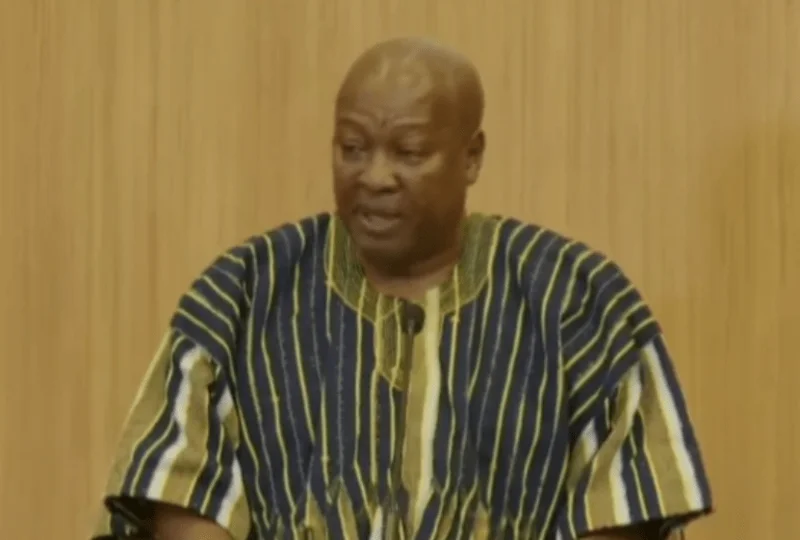
President John Dramani Mahama has outlined a series of ambitious infrastructure and utility reforms designed to anchor the country’s '24-Hour Economy' and drive industrial competitiveness. Central to this strategy is a massive 1.5-gigawatt (GW) utility-scale solar-hydropower project integrated with Battery Energy Storage Systems (BESS) at Buipe in the Savannah Region. This initiative, co-developed with private partners, aims to drastically reduce industrial electricity tariffs from the current 18-23 cents per kilowatt-hour to a more competitive 7-9 cents. The first phase, a 100-megawatt solar facility, is scheduled to begin construction shortly, signaling a pivot toward affordable and reliable renewable energy to support local manufacturing and job creation.
Parallel to these energy developments, the government has reported significant financial recovery within the utility sector. President Mahama revealed that comprehensive reforms at the Electricity Company of Ghana (ECG) have successfully boosted monthly revenue collections to nearly GH"2 billion. This financial turnaround has enabled the state to settle long-standing debts owed to Independent Power Producers (IPPs) and gas suppliers, bringing much-needed stability to the energy value chain. By addressing these legacy debts and commercial losses, the administration aims to create a more resilient foundation for private sector growth and utility reliability.
In the transport and agricultural sectors, the construction of the new Afram River bridge at Ekye Amanfrom is being hailed as a 'game-changer' for regional development. President Mahama urged Ghanaian investors to seize emerging opportunities in the Afram Plains, an area historically hindered by geographical isolation. With the bridge facilitating easier access, the region is poised for a surge in large-scale agribusiness, specifically in cashew cultivation, rice production, and palm oil plantations. Local entrepreneurs have been encouraged to invest promptly in these agro-processing ventures and tourism opportunities around Volta Lake to ensure that domestic stakeholders lead the region's economic awakening before foreign interests dominate the market.
Further supporting this nationwide infrastructure drive is the progress of the Adenta-Dodowa Road Project, which is currently 63% complete. Despite challenges related to property acquisition and utility relocation, the project remains on track for substantial completion by March 2027. These interconnected efforts—spanning renewable energy, financial reforms in the power sector, and strategic road and bridge construction—represent a unified push to lower the cost of doing business in Ghana. By providing the necessary infrastructure and cheaper power, the government expects to foster a more attractive environment for both local and international investment, ultimately driving the nation's industrialization and economic transformation.
This story touches markets covered on Anansi Intelligence ↗.
Related topic
John Mahama: Latest News & Updates →More from business
Continue exploring similar stories


