••
President Mahama Anchors National Education Reset with New University Projects and Infrastructure Upgrades
•3 min read•11 sources
President John Dramani Mahama has reaffirmed his administration's commitment to a comprehensive "education reset," focusing on expanding tertiary access and eliminating severe infrastructure deficits across Ghana. Central to this agenda is the fulfillment of a campaign promise to establish the first public university in the Ahafo Region. During a meeting with the Ahafo Regional House of Chiefs, the President assured traditional leaders that the institution would be operational before the end of his current term. This expansion is supported by broader investments, including the procurement of school buses through the Ghana Education Trust Fund (GETFund) to improve mobility for students in newly created regions.
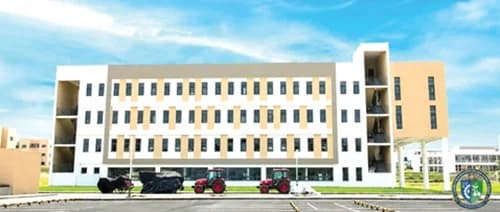
In the Eastern Region, the University of Engineering and Agricultural Sciences (UEAS) in Bunso is set to redefine specialized education for the 2026/2027 academic year. Developed with a $92 million loan from the Korean Exim Bank, UEAS is the first African institution designed to merge engineering and agriculture into a unified value chain. The university aims to produce industry-ready graduates to tackle food security and youth unemployment. Operating with a residential system modeled after Oxford and Cambridge, the campus features state-of-the-art laboratories and faculty buildings, initially offering programs in Agronomy and Electrical Engineering.
At the basic education level, the government is moving to close historic gaps and replace unsafe learning environments. In Akwamu-Aboasa, Education Minister Haruna Iddrisu recently commissioned a new Junior High School (JHS), ending a 120-year lack of local JHS access in the Asuogyaman District. Similarly, students in Bosomponso, Ashanti Region, have transitioned from an abandoned pigsty into a modern three-unit classroom block commissioned by the District Assembly. Further north, the Kwahu Afram Plains North District Assembly has broken ground on a modern kindergarten block at the Donkorkrom Islamic School, with completion expected by early 2027.
Traditional leadership is also playing a pivotal role in this educational transformation, exemplified by Nana Osei Kofi Abiri, the Paramount Chief of Kenyasi No. 1. Through philanthropy and corporate partnerships, including a 600,000 cedi CSR investment from the Underground Mining Alliance, the Chief has funded a GH¢700,000 classroom block and established the Lady Julia ICT Training Centre. His collaboration with the University of Mines and Technology (UMaT) to provide vocational training serves as a national benchmark for community-driven development that relieves the financial burden on local government bodies.
Despite these strides, significant challenges remain, particularly regarding school congestion. At the Amantin English and Arabic Basic School, over 100 pupils are currently crammed into single classrooms, with some forced to learn outdoors during the rainy season. Regional Minister Francis Owusu has acknowledged the crisis, announcing plans for a new three-unit block to alleviate the pressure. These contrasting realities of high-tech universities and overcrowded primary schools underscore the urgency of the administration's infrastructure drive as it seeks to harmonize educational standards across the country.
Related topic
John Mahama: Latest News & Updates →Live rates
Dollar to cedi rate →

