••
President Mahama Urged to Apply Dagbon Peace Model to Nanung as Government Confronts National Infrastructure and Housing Challenges
•3 min read•9 sources
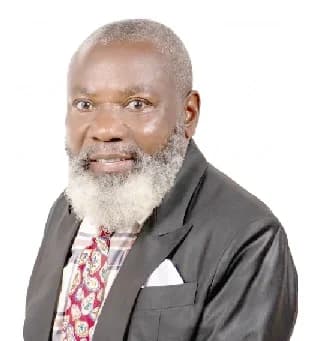
In a series of major policy developments, President John Dramani Mahama is being called upon to replicate successful peace-building strategies in Northern Ghana while his administration simultaneously tackles a massive national housing deficit and critical infrastructure bottlenecks. Abdul-Samed Hamza, the Municipal Chief Executive (MCE) for Nanumba North, has formally appealed to the President to apply the 'Dagbon model' to resolve the longstanding Nanung chieftaincy dispute. Hamza argues that the lack of a substantive Overlord has significantly hindered socio-economic progress in the Nanung Traditional Area. He emphasized that the methods of dialogue and consultation used to settle the Dagbon crisis are essential for unifying the community and unlocking its potential for development.
On the international stage, the Deputy Minister of Local Government, Chieftaincy and Religious Affairs, Rita Naa Odolley Sowah, highlighted the severity of Ghana's urban pressures during the United Nations General Assembly High-Level Political Forum. The Deputy Minister revealed that the nation faces a critical housing deficit of 1.8 million units, with approximately 37% of the urban population living in informal settlements. To address these challenges, the government is prioritizing the New Urban Agenda, which focuses on scaling up affordable housing, enhancing urban financing, and promoting climate-resilient cities through increased international cooperation.
Domestically, the administration's efforts to decentralize and decongest have received high-profile support. Apostle Abraham Amoh, Chairman of the Christ Apostolic Church (CAC) Ghana, commended President Mahama’s proposal to potentially relocate the national capital from Accra. Amoh suggested that a well-planned move to the Eastern Region could mitigate Accra’s chronic flooding and infrastructure strain. He called for a non-political, consensus-based approach in Parliament to ensure the long-term success of such a relocation. Concurrently, the Coalition of Civil Society Organisations on Migration in Ghana (CCMG) is urging the government to further decentralize migration governance to district assemblies to better manage local migration dynamics and data.
Infrastructure development remains a cornerstone of the current agenda, as Parliament has approved a $500 million credit facility for the Ghana Market Access and Connectivity Project (GMACP). This funding is designated for the rehabilitation of over 1,050 kilometers of rural feeder roads to enhance farm-to-market connectivity across 13 regions. While the Minister of Roads and Highways, Governs Kwame Agbodza, assured that 98% of the loan would be applied directly to construction, lawmakers have stressed the need for strict supervision to ensure the effective use of funds.
In the Bono Region, Minister Joseph Addae Akwaboa addressed delays in the Sunyani-Abesim road dualization project, citing necessary adjustments to engineering designs for the relocation of Ghana Water Limited installations. He confirmed that the contractor is expected to mobilize next month and noted that construction on the Sunyani-Baakoniaba inner-city road is set to begin immediately. These regional projects reflect the broader government commitment to alleviating traffic congestion and improving urban mobility alongside its ambitious rural and national-level development goals.
This story touches markets covered on Anansi Intelligence ↗.
Related topic
John Mahama: Latest News & Updates →More from politics
Continue exploring similar stories


