••
President Mahama Commissions Tema Integrated Industrial Park to Drive Value Addition and Job Creation
•3 min read•19 sources
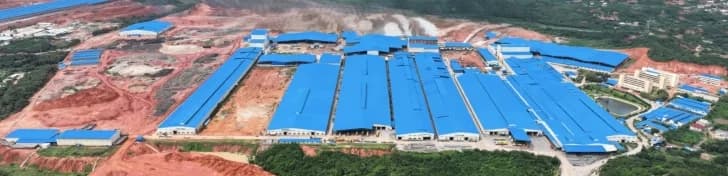
President John Dramani Mahama has officially launched the construction of the Tema Integrated Industrial Park (TIIP), a flagship project designed to transform Ghana from a raw material-dependent economy into a competitive manufacturing hub. Spanning approximately 120 hectares, the park is a public-private partnership involving the Ghana Integrated Aluminium Development Corporation (GIADEC), TDC Ghana Limited, and Arise Integrated Industrial Platforms. During the sod-cutting ceremony, President Mahama emphasized that the era of exporting unprocessed resources must end, famously stating that "exported raw materials are exported jobs." The TIIP is expected to create over 4,000 sustainable jobs and bolster local production of bauxite, timber, and cocoa, aligning with the government's 24-Hour Economy strategy and the African Continental Free Trade Area (AfCFTA) framework.
The industrial park will serve as a multi-sector ecosystem for agro-processing, manufacturing, logistics, and light industries. To ensure the park's success, the government has approved four critical manufacturing policies focusing on textiles and garments, pharmaceuticals, automotive components, and agribusiness. These policies are intended to attract strategic investors and provide a structured environment for value addition. President Mahama also underscored the importance of human capital development, pledging increased investment in technical, vocational, and digital skills training to prepare Ghanaian youth for the global job market and the technical demands of the new industrial area.
Complementing these industrial efforts are existing success stories and trade facilitation initiatives. Twyford Ghana, recently named the "Tile & Ceramic Manufacturing Company of the Year" at the 9th Ghana–West Africa Business Excellence Awards, exemplifies this industrial shift, having expanded its "Made in Ghana" exports to over 25 countries. Similarly, Nordiq Hygiene Care Industry in Tema has demonstrated the social impact of local production by creating hundreds of jobs, particularly for women and persons with disabilities, while addressing period poverty through affordable sanitary pad production. These examples highlight a growing trend of Ghanaian manufacturers moving beyond local demand to capture international markets.
To further improve the business environment, key stakeholders in the shipping and logistics sectors have pledged to reduce the high cost of doing business at Ghana's ports. Following a forum convened by the Ghana Shippers’ Authority, the Ghana Ports and Harbours Authority (GPHA) announced measures to mitigate congestion and corruption, including rent waivers on affected cargo and increased automation. By streamlining port operations and lowering costs, Ghana aims to enhance its competitiveness as a regional trade gateway. Collectively, these developments in industrial infrastructure, local production, and trade facilitation represent a pivotal moment in Ghana’s journey toward a sustainable, manufacturing-led economy.
This story touches markets covered on Anansi Intelligence ↗.
Related topic
John Mahama: Latest News & Updates →More from business
Continue exploring similar stories


