••
President Mahama Forms Emergency Task Force as Minority Petitions Parliament Over 3.9-Tonne Cocaine Seizure
•3 min read•35 sources
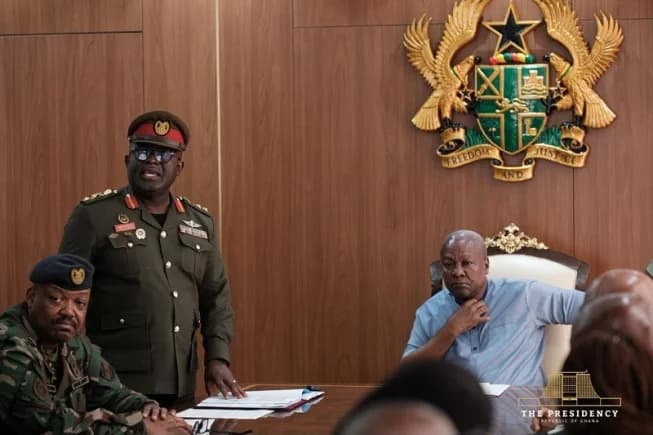
President John Mahama has directed an inter-agency task force to develop a comprehensive roadmap to combat drug trafficking within two weeks following the historic seizure of nearly 3.9 tonnes of cocaine in France. The narcotics, valued at approximately $260 million (€225 million), were intercepted by French customs at the Port of Dunkirk on September 10, 2026, hidden within a container of plastic waste shipped from Ghana. In a high-level meeting with security chiefs, President Mahama emphasized the need to restore the integrity of Ghana’s borders and directed the task force to assess current detection systems and enhance prevention strategies to ensure the country is no longer used as a transit hub for transnational organized crime.
Investigations into the security breach have already led to the arrest of several suspects, including four officials from the Customs Division of the Ghana Revenue Authority (GRA) linked to improper container clearances at the Tema Port. The Narcotics Control Commission (NACOC) revealed that the suspects had been under surveillance for up to two years as part of a coordinated intelligence operation. The shipment has been linked to the network of Dutch fugitive trafficker Jos Leijdekkers. While the arrests signal progress, the incident has sparked a fierce national debate regarding the effectiveness of port scanning systems and the oversight of cargo leaving Ghanaian shores.
In the legislature, a group of Members of Parliament led by First Deputy Minority Whip Habib Iddrisu has petitioned the Speaker to recall the House from recess for an extraordinary session. Invoking Article 112(3) of the Constitution, the MPs are demanding a formal inquiry into the institutional failures that allowed such a massive consignment to pass through the ports undetected. Political tensions escalated further during media appearances, where Akwatia MP Bernard Bediako Baidoo clashed with IMANI Africa’s Kofi Bentil over the government’s level of accountability, while NPP legal team member Enoch Anhwere Afoakwa warned that the international community risks viewing Ghana as a "cocaine coast" rather than a gold-producing nation.
Policy experts and former legislators are now calling for a fundamental review of the port inspection regime. Former MPs Inusah Fuseini and Alexander Abban have criticized the previous withdrawal of NACOC personnel from physical inspections, arguing that their specialized expertise is essential to supplement revenue-focused customs checks. Additionally, businessman Samson Asaki Awingobit has urged President Mahama to invest in modern detection technology, specifically pointing out a lack of sniffer dogs at airports and ports compared to regional neighbors. These calls for reform highlight a growing consensus that port security must prioritize narcotics detection alongside revenue collection.
As the task force prepares its report, legal practitioners like Austin Kwabena Brako-Powers have cautioned against turning the drug bust into a "political cacophony." He argued that partisan point-scoring undermines national security and that the fight against narcotics must remain a non-partisan, intelligence-led agenda. With the eyes of the international community on Ghana, the forthcoming roadmap from the President’s task force will be a critical test of the administration's ability to secure the nation’s gateways and protect its global reputation.
Related topic
Ghana Customs Recruitment: Latest News & Updates →Live rates
Ghana gold price →

