••
President Mahama Achieves Record Approval as Ghana Proposes New "Auditors’ Court" to Combat Public Sector Corruption
•3 min read•16 sources
Public confidence in the Ghanaian government has reached a significant milestone, with President John Mahama’s approval rating surging to a record high of 71%, according to the latest National Tracking Poll by Global InfoAnalytics. The survey, conducted between May 30 and June 12, 2026, among 8,784 registered voters, indicates that 66% of citizens believe the country is moving in the right direction. While unemployment and economic management remain primary concerns, public perception of the fight against corruption is improving, with 54% of respondents reporting a perceived decline in corruption levels. This surge in optimism coincides with the government's renewed focus on institutional accountability and the proposed establishment of specialized legal bodies to handle financial mismanagement.
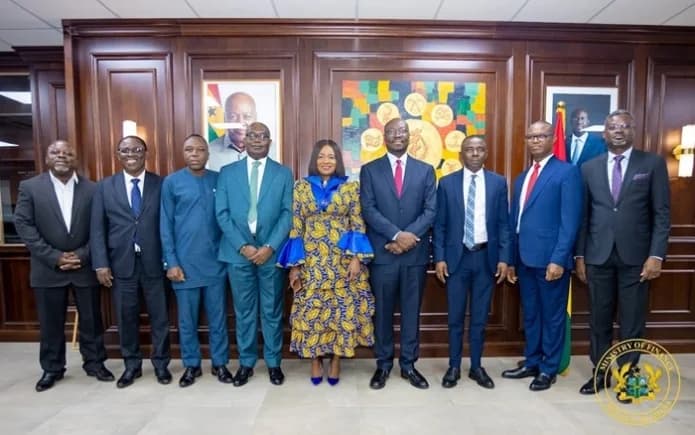
In a major move to enhance financial oversight, Finance Minister Dr. Cassiel Ato Forson has announced plans to establish an "Auditors’ Court." This specialized court is designed to prosecute audit offenses and address recurring infractions identified in the Auditor-General’s reports. Speaking at the inauguration of the new Internal Audit Agency (IAA) Governing Board, led by Professor Joshua Yindenaba Abor, Dr. Forson emphasized the need for a more robust internal audit system to curb public sector waste and taxpayer losses. The new board is tasked with reviewing the Internal Audit Agency Act of 2003 and implementing reforms that promote transparency and proactive risk management across all public institutions.
Despite the positive outlook for the presidency, the public's trust in specific anti-corruption agencies shows a notable shift. The Global InfoAnalytics poll revealed that 24% of Ghanaians now prefer the Attorney-General’s office to lead the anti-corruption fight, compared to only 16% who favor the Office of the Special Prosecutor (OSP). This decline in confidence for the OSP is largely attributed to persistent legal hurdles and recent court rulings that have limited its independent prosecutorial authority. While 36% of the population believes both institutions could be effective if they collaborated, the data reflects a growing skepticism toward the OSP’s ability to secure high-profile convictions following its initial public favor.
The political landscape also remains marked by friction between government officials and investigative bodies. Joseph Yamin, the National Organizer of the NDC, recently voiced frustration over the pace of investigations led by EOCO regarding his alleged involvement in illegal mining. Yamin’s critique highlights the ongoing tension between political figures and the agencies tasked with the "Reset Agenda" to eradicate galamsey. As the government moves forward with the Auditors' Court and other accountability reforms, the balance of power between the Attorney-General, the OSP, and internal audit mechanisms will remain a central focus of Ghana’s political and legal discourse.
This story touches markets covered on Anansi Intelligence ↗.
Related topic
NDC (National Democratic Congress): Latest News →More from politics
Continue exploring similar stories


